Understanding the Basics: RFID and NFC Defined
Radiofrequenz-Identifikation (Rfid) is a wireless communication technology that uses electromagnetic fields to automatically identify and track tags attached to objects. An RFID system consists of a tag (or wristband) and a reader. The tag contains a microchip and an antenna; the reader emits radio waves and receives signals back from the tag. RFID operates across several frequency bands, each with distinct characteristics, read ranges, and applications.
Near Field Communication (Nfc) is a specialised subset of high-frequency (Hf) Rfid. All NFC devices operate at 13.56 MHz, the same HF band used by many RFID systems, but NFC follows strict international standards (ISO/IEC 14443 and ISO/IEC 18092) that enable short-range communication and peer-to-peer data exchange. This standardisation is what makes NFC natively compatible with modern smartphones, allowing a simple tap to read or write data.
When evaluating wristband solutions for events, venues, or industrial settings, understanding these technical distinctions is essential. The choice between an NFC wristband and a broader RFID wristband directly impacts user experience, system integration, and total cost of ownership.
Frequency Comparison: Lf, Hf, Nfc, and UHF
RFID technology is categorised by the radio frequency it uses. Each frequency offers unique advantages and trade-offs in read range, data transfer speed, and resistance to interference. Below is a detailed comparison of the three primary RFID frequency bands, including NFC’s position within the HF spectrum.
| Frequency Band | Frequency Range | Typical Read Range | Key Characteristics | Common Applications |
|---|---|---|---|---|
| Low Frequency (Lf) | 125 Khz | Up to 10 cm | Excellent penetration through water and metal; low data rate; limited memory | Animal identification, Zugriffssteuerung, industrial asset tagging |
| Hohe Frequenz (Hf) / Nfc | 13.56 MHz | Nfc: 2–5 cm (tap-to-read); HF RFID: bis 1 M | Good penetration; moderate data rate; NFC supports smartphone interaction and multi-application chips | Cashless payments, event ticketing, public transport cards, RFID silicone wristbands for access control |
| Ultra-High Frequency (Uhf) | 860–960 MHz | Passive: bis 10 M; Active: bis 100 M | Fast data transfer; long range; can read multiple tags simultaneously; sensitive to liquids and metals | Supply chain logistics, industrial tracking, vehicle identification, UHF RFID tags for warehouse management |
NFC operates at 13.56 MHz, so it shares many technical properties with HF RFID. Jedoch, NFC’s proximity requirement (typically 2–5 cm for a tap) is by design – it enforces intentional interaction, which enhances security and reduces accidental reads. This makes NFC wristbands ideal for patron-facing services like contactless payments and personalised digital experiences.
Key RFID Frequencies and Their Wristband Use Cases
- Lf 125 Khz: Rarely used in modern wristbands for events due to short range and low memory. May appear in industrial or livestock tracking.
- Hf 13.56 MHz (includes NFC): The dominant frequency for consumer wristbands. Chips like NTAG213 and MIFARE Classic/DESFire are common. Supports encryption and multi-application profiles.
- UHF 860–960 MHz: Growing in use for large-scale events with long-range gates (bis 10 M) and in industrial staff tracking where contactless, high-speed identification is critical.
NFC Wristbands: Smartphone Compatibility and Tap-to-Pay
One of the defining advantages of an NFC wristband is its seamless compatibility with smartphones. Both Android and iOS devices can read and write to NFC tags without additional hardware, thanks to built-in NFC controllers. This capability transforms a simple wristband into an interactive gateway for attendees.
Event organisers often choose NFC wristbands equipped with the NTAG213 chip – a widely supported NFC Forum Type 2 tag with 144 bytes of user memory, a unique 7-byte serial number, and fast read speeds. The NTAG213 wristband is perfect for:
- Tap-to-pay cashless transactions at food stalls and bars
- Instant session check-ins and workshop access
- Social media integration – a tap can open an event app, share a digital business card, or check-in on Facebook
- Sponsor activations and branded digital content delivery
For events requiring more complex functionality, such as a single wristband handling payment, Zugriffssteuerung, loyalty points, and public transport, das MIFARE DESFire chip offers a powerful alternative. MIFARE DESFire EV2 and EV3 support multiple applications on one wristband, with advanced encryption (AES, 3DES) and a flexible file system. A festival, Zum Beispiel, can partition the chip’s memory to handle ticketing, cashless wallet, and VIP area access simultaneously, all within the NFC ecosystem.
Because NFC wristbands require a close tap (2–5 cm), they eliminate the risk of accidental scanning and give users full control over when and where they interact. This intentionality is a key security feature in crowded venues.
RFID-Armbänder: Broader Spectrum for Long-Range and Industrial Use
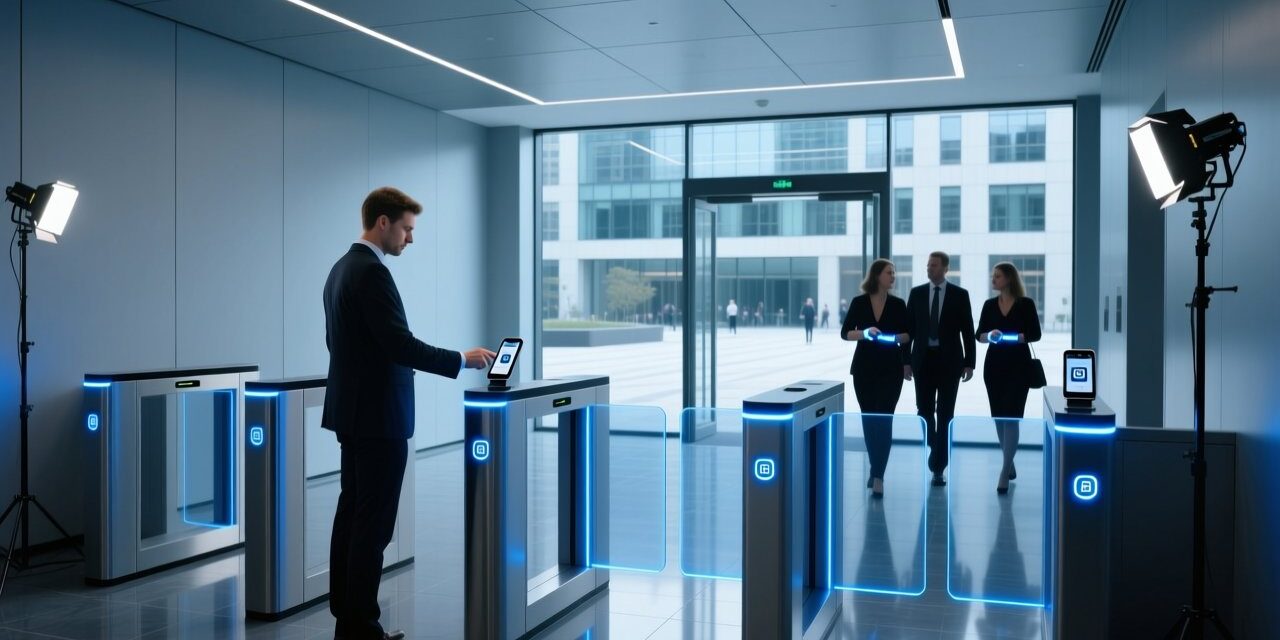
While NFC excels at personal transactions, the broader RFID family—especially UHF—opens up possibilities for high-speed, bulk identification. UHF RFID wristbands can be read from distances of up to 10 metres, allowing fast, hands-free access at gates. Hundreds of attendees can pass through an entry portal simultaneously without slowing down, making UHF ideal for mass events like marathons, music festivals, and sporting tournaments.
UHF RFID also dominates industrial environments. When integrated into staff wristbands, UHF RFID tags enable automatic zone control, real-time personnel tracking, and safety compliance monitoring. The long read range and rapid multi-tag reading reduce bottlenecks and improve operational oversight in warehouses, manufacturing floors, and construction sites.
Jedoch, UHF wristbands face challenges around liquids and metal. A reader’s performance can degrade near the human body, so careful antenna design and reader placement are needed. In contrast, HF/NFC is more forgiving and works reliably even when the wristband is in proximity to skin.
Price Comparison: NFC Chips vs UHF vs LF
Cost is often the deciding factor when choosing between wristband technologies. Prices vary depending on chip type, material, and order volume, but the following table provides a general benchmark for fully finished, printed wristbands in mid-range quantities (5,000–10,000 units).
| Technology | Chip Example | Estimated Unit Price (USD) | Primary Cost Drivers |
|---|---|---|---|
| Lf 125 Khz | EM4200, ATA5577 | $0.80 – $1.50 | Lower demand; niche applications |
| HF/NFC | NTAG213 | $0.30 – $0.70 | High volume in consumer electronics; mature production |
| HF/NFC | MIFARE DESFire EV2 | $1.20 – $2.50 | Advanced security and multi-application memory |
| Uhf | Impinj Monza R6, Alien Higgs 9 | $0.25 – $0.80 | Chip complexity; antenna design for on-body performance |
NTAG213 wristbands sit at a sweet spot: highly affordable, widely compatible, and sufficient for most event use cases. MIFARE DESFire commands a premium due to its security certification and multi-application capability. UHF wristbands can be cost-competitive, but total system cost often includes more expensive readers and antennas, which should be factored into the overall budget.
How to Choose the Right Wristband: A Decision Framework
Selecting between an NFC wristband and an RFID wristband (HF or UHF) depends on your specific operational needs. Use this simple criteria list:
- If you need smartphone interaction (tap-to-connect, digital surveys, social media), choose NFC. NTAG213 is the best chip for cost-sensitive projects; MIFARE DESFire for secure multi-application environments.
- If you require hands-free, long-range identification (e.g., gates that read wristbands as people walk through), UHF is mandatory. Look for wristbands with an optimised UHF antenna to compensate for body absorption.
- If your venue involves water, pools, or high humidity, HF/NFC is more reliable. NFC wristbands work well in Wasserparks and resorts.
- For industrial tracking, UHF delivers the speed and range needed. But assess your environment: metal racks, heavy machinery, and electrical noise may require additional tuning.
- Budget and scalability: NFC chips like NTAG213 are the most economical for large-scale events; UHF systems may have higher infrastructure costs but lower per-tag cost in huge volumes.
Most event organisers will find that NFC wristbands with an NTAG213 chip cover 90% of requirements—cashless payments, Zugriffssteuerung, and attendee engagement—while keeping per-unit costs low and deployment simple.
Integration and Compatibility Considerations
Before placing an order, verify compatibility with your access control readers, POS terminals, and event management software. Key questions to ask your wristband supplier:
- Does the chip work with your existing reader fleet? Many NFC readers also read MIFARE and DESFire, but UHF readers are completely different hardware.
- Can the wristband be encoded with your own data (e.g., unique IDs, encrypted payment tokens)?
- Is the wristband material durable enough for multi-day events? RFID silicone wristbands are comfortable, waterproof, and reusable, while Tyvek or paper wristbands are cost-effective for single-day use.
- Does the supplier provide pre-encoding or on-site encoding support?
At RFIDHY, we offer a full range of NFC and RFID wristbands with expert guidance on chip selection, encoding, and integration. For personalised advice, contact our team to discuss your project requirements.
FAQ
What is the main difference between NFC and RFID wristbands?
NFC is a specific type of high-frequency (13.56 MHz) RFID technology designed for short-range, smartphone-compatible interactions. RFID is a broader term covering LF, Hf, and UHF frequencies with varying read ranges and capabilities. NFC wristbands excel at tap-to-pay and personalised experiences, while UHF RFID wristbands enable long-range, high-speed group scanning.
Can I use my smartphone to read an NFC wristband?
Ja. Nearly all modern Android and iOS smartphones have built-in NFC readers. With an NFC wristband based on an NTAG213 or similar chip, attendees can simply tap their phone to the wristband to check in, access digital content, or make a payment—no separate reader necessary.
Which chip is better for events: NTAG213 or MIFARE DESFire?
NTAG213 is cost-effective, universally compatible, and ideal for standard access control and cashless payments. MIFARE DESFire offers higher security, larger and more flexible memory, and multi-application support—perfect for events combining ticketing, Zahlung, and loyalty into one wristband.
What read range can I expect from UHF RFID wristbands?
Passive UHF RFID wristbands can be read from up to 10 metres under optimal conditions. Jedoch, on-body reading reduces range somewhat, so real-world performance is often 5–8 metres. This is still sufficient for hands-free gate access and automatic zone tracking.
Are NFC wristbands waterproof?
NFC chips themselves are resilient, but wristband durability depends on the material. Silicone and plastic wristbands are fully waterproof and suitable for pools and water parks. Some disposable paper or Tyvek wristbands may be water-resistant but not submersible.
Find the Perfect Wristband for Your Next Event
Whether you need smartphone-compatible NFC wristbands for cashless experiences or long-range UHF wristbands for high-throughput access control, RFIDHY has a solution. Explore our full range of customisable wristbands and receive expert chip selection advice.