
Why US Hospitals Are Adopting RFID Patient ID Wristbands
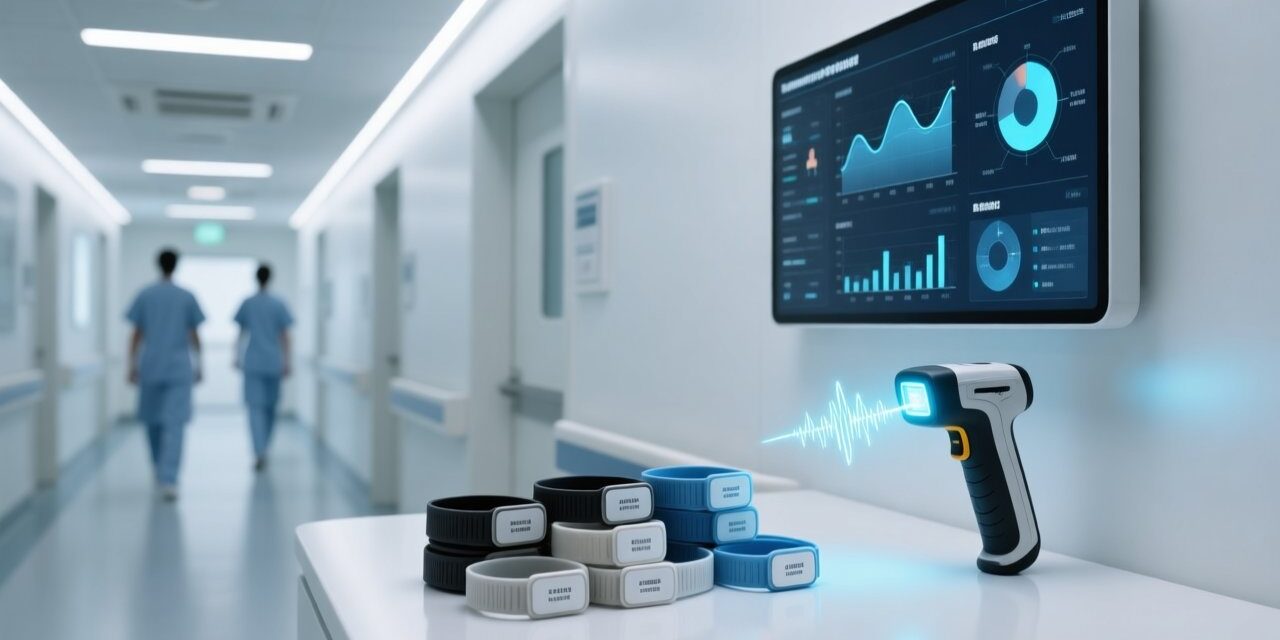
Across the United States, acute care hospitals are accelerating adoption of RFID patient ID wristbands to reduce identification errors, streamline admissions, and support real-time location services (RTLS). Unlike legacy barcode systems, passive UHF RFID wristbands enable contactless, multi-tag reading at distance — critical in high-acuity environments where speed and accuracy directly impact patient safety.
HIPAA Compliance: Beyond Encryption
HIPAA does not mandate specific technologies — but it requires safeguards for protected health information (PHI) throughout its lifecycle. RFID wristbands themselves do not store PHI; instead, they serve as secure, encrypted identifiers linked to centralized EHR systems via middleware. At RFIDHY, all RFID plastic wristbands y RFID silicone wristbands used in healthcare applications support AES-128 encryption on-chip and integrate with HIPAA-aligned access control protocols. Data residency, audit logs, and role-based permissions remain under hospital IT governance — ensuring full compliance responsibility stays with the covered entity.
Printer Compatibility: Thermal vs. Thermal Transfer
Seamless integration with existing hospital printing infrastructure is non-negotiable. RFIDHY’s HY-XI300 desktop RFID printer supports both direct thermal and thermal transfer modes, enabling durable, smudge-resistant printing on disposable PVC, Papel, and silicone substrates. The printer embeds encoded UHF RFID inlays during label production — eliminating manual encoding steps and reducing error rates. For hospitals using Zebra or Honeywell printers, our wristbands are pre-tested for ribbon adhesion, heat tolerance, and chip survivability across 50–200°C thermal cycles.
Bulk Pricing Structures for GPOs and Health Systems
As a certified wristband supplier, RFIDHY offers tiered bulk pricing aligned with Group Purchasing Organization (GPO) contract frameworks. Orders exceeding 50,000 units qualify for volume discounts, extended payment terms (Net 60), and dedicated logistics coordination. All medical RFID wristband shipments include ISO 13485-certified documentation, RoHS/REACH compliance reports, and lot-level traceability — essential for Joint Commission audits and FDA-regulated workflows.
Material Selection: Balancing Durability, Safety, and Cost
For clinical environments, material choice impacts infection control, wear comfort, and scanner performance. Our RFID disposable ABS wristbands offer rigidity and chemical resistance ideal for ER and ICU use, while RFID fabric woven wristbands provide breathability for pediatric and long-stay patients. Each variant undergoes ASTM F1980 accelerated aging and ISO 10993 biocompatibility screening — confirming skin-safe formulation and latex-free composition.
Frequently Asked Questions
- Are RFID patient wristbands HIPAA-compliant by default?
Not inherently — compliance depends on how the wristband integrates into your data architecture. RFIDHY wristbands support encryption and secure authentication protocols required under HIPAA’s Technical Safeguards (§164.312), but final validation rests with your HIPAA Security Rule implementation. - Can your RFID wristbands be printed on standard Zebra ZD420 or Honeywell PD43 printers?
Yes — our pre-encoded RFID disposable paper wristbands y RFID disposable PVC wristbands are validated for use with Zebra, Honeywell, and Brother industrial thermal printers using standard media profiles. - Do you offer custom encoding or private labeling for hospital systems?
Sí. We support EPC Gen2v2 encoding, custom TID locking, and OEM branding — including embossed logos, QR + RFID hybrid encoding, and HL7/FHIR-compliant data mapping upon request. - What’s the minimum order quantity (MOQ) for bulk hospital contracts?
Our standard MOQ is 10,000 units per SKU. GPO members and integrated delivery networks (IDNs) may negotiate lower thresholds based on annual commitment volume.
Ready to Pilot RFID Patient ID Wristbands at Your Facility?
Contact RFIDHY’s Healthcare Solutions Team today for a no-cost compatibility assessment, sample kit, and customized bulk pricing proposal — backed by ISO 13485 manufacturing and US-based technical support.