Why GDPR Compliance Is Non-Negotiable for NFC Wristbands in Germany
Under the General Data Protection Regulation (GDPR) and its German implementation — the Bundesdatenschutzgesetz (BDSG) — any processing of personal data via NFC wristband systems must satisfy strict legal bases, transparency obligations, and data minimisation principles. For German event technology providers, this means that wristband deployments used for access control, cashless payments, or attendee analytics cannot rely on implied consent or vague privacy notices. Instead, they require purpose-specific, granular, and revocable consent — enforced at both system architecture and operational levels.
Data Storage Models That Meet DSGVO Requirements
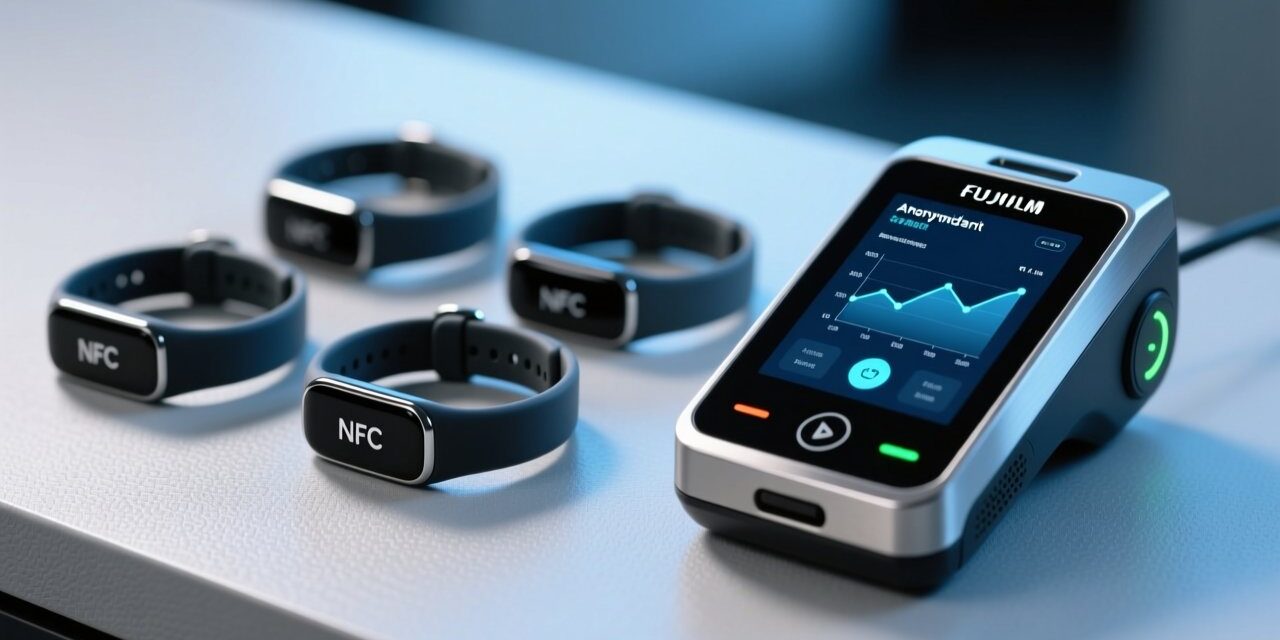
GDPR-compliant NFC wristbands must avoid storing personally identifiable information (PII) directly on the chip. Instead, RFIDHY recommends a tokenised architecture: each RFID silicone wristband carries only a unique, non-reversible identifier linked to a secure, encrypted backend database hosted within the EU. This ensures that even if a wristband is lost or intercepted, no PII is exposed. The backend system must enforce strict role-based access controls, audit logging, and automatic data deletion after the retention period defined in your privacy notice — typically 30 days post-event unless extended for contractual or legal reasons.
Lawful Consent Mechanisms for German Event Attendees
Under Article 7 GDPR, consent must be freely given, specific, informed, and unambiguous. For German events, this translates to multi-step digital opt-in workflows: attendees scan an NFC-enabled kiosk to initiate registration, then review and separately confirm permissions for access, payments, and optional analytics — each toggleable and documented with timestamped digital signatures. Pre-ticked boxes are prohibited. To support this, RFIDHY’s RFID fabric woven wristbands integrate seamlessly with certified German ID verification APIs and consent management platforms (CMPs), enabling real-time synchronisation with your data processing agreement (DPA).
Privacy-by-Design Product Recommendations
Selecting hardware aligned with GDPR principles is foundational. RFIDHY offers several DSGVO-ready options:
- For high-volume festivals: RFID disposable PVC wristbands — tamper-evident, ISO-compliant, and pre-programmed with dynamic session tokens instead of static IDs.
- For premium corporate events: RFID watch wristbands — featuring embedded NTAG215 chips with password-protected memory sectors to prevent unauthorised writes.
- For medical or sensitive venues: Patients wristband solutions adapted for event staff — incorporating encrypted biometric binding and zero-knowledge proof authentication protocols.
Operational Audits and Vendor Accountability
Your wristband vendor must sign a GDPR-compliant Data Processing Agreement (DPA) confirming their role as a processor — not a controller — of personal data. At RFIDHY, all manufacturing, firmware, and cloud services are managed under ISO/IEC 27001-certified infrastructure located in Frankfurt. We provide full documentation for your Data Protection Impact Assessment (DPIA), including chip-level encryption standards (AES-128), secure element integration, and third-party penetration test reports. This enables German clients to demonstrate accountability to the Bundesbeauftragte für den Datenschutz und die Informationsfreiheit (BfDI) during audits.
FAQ
- Do NFC wristbands inherently violate GDPR?
No — when implemented correctly. GDPR does not prohibit NFC technology; it prohibits unlawful processing. Tokenisation, minimal data collection, and explicit consent make NFC wristbands fully compliant. - Can I store names or email addresses on the NFC chip?
non. Storing PII directly on the chip violates Article 5(1)(c) (data minimisation) and increases breach risk. Always use backend mapping with strong encryption and access controls. - What’s the difference between ‘GDPR-compliant’ and ‘DSGVO-compliant’?
DSGVO is the German abbreviation for GDPR. They refer to the same regulation — though German enforcement includes additional national provisions under BDSG, especially regarding employee data and public-sector processing. - Do I need a Data Protection Officer (DPO) for my event wristband project?
Oui, if your organisation processes large-scale personal data regularly — such as recurring festivals or multi-site venue operators. Even one-off events may require DPO consultation if using biometric or behavioural tracking features.
Ensure Your Next German Event Meets DSGVO Standards
Download our free GDPR Compliance Checklist for NFC Event Systems — including sample consent forms, DPIA templates, and vendor evaluation criteria tailored for German law.
Request your copy today — and speak with our EU Data Compliance Specialist to review your wristband deployment plan.