
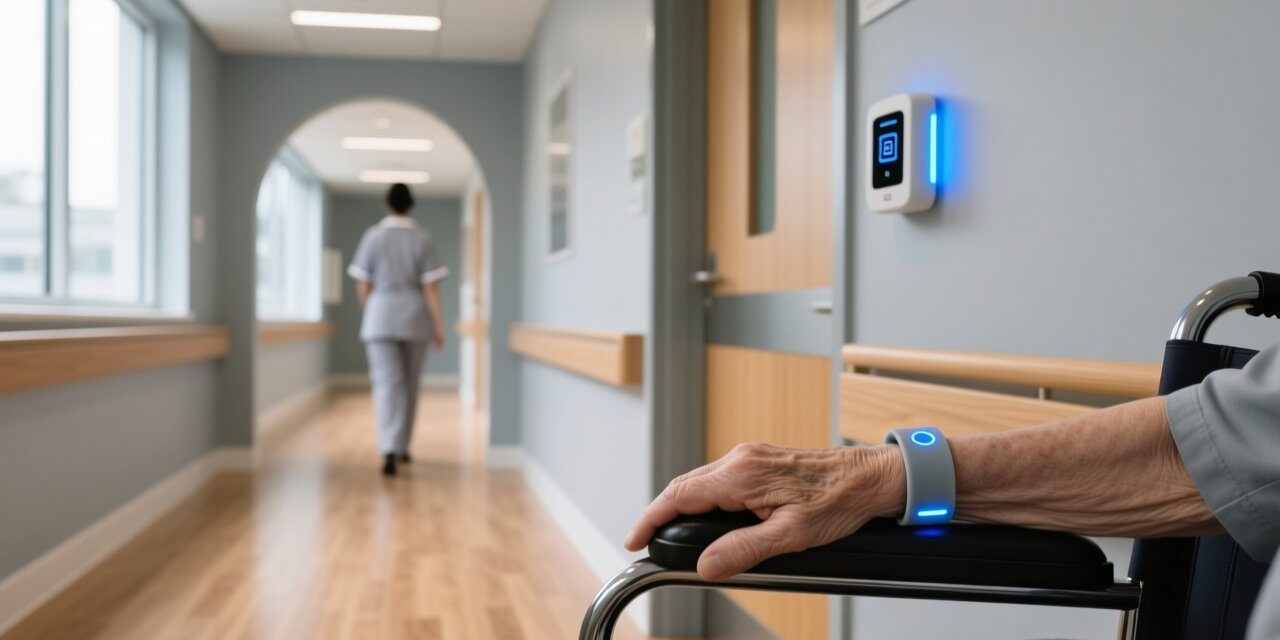
Why Wandering Prevention Is a Critical Priority in UK Care Homes
Dementia-related wandering poses significant clinical, operational, and regulatory challenges across UK care facilities. According to the Alzheimer’s Society, over 40% of people living with dementia experience episodes of unintentional or unsafe ambulation—often leading to falls, elopement, or distress. With rising CQC scrutiny on person-centred safeguarding and the NHS Long Term Plan’s emphasis on digital health integration, care homes require scalable, non-intrusive, and clinically appropriate tracking solutions. Passive RFID wristbands offer a proven, low-power, privacy-respecting alternative to GPS or Bluetooth-based wearables.
How RFID Technology Supports Ethical, Effective Monitoring
Unlike consumer-grade trackers, passive UHF and HF RFID systems operate without batteries, eliminating charging burdens and reducing failure points. When paired with strategically placed fixed RFID readers at exits, corridors, and high-risk zones (e.g., stairwells, garden gates), they trigger immediate alerts upon unauthorised movement—enabling rapid, targeted staff response. Critically, these systems do not continuously broadcast location data; they only register presence at defined checkpoints—ensuring GDPR compliance and aligning with the Mental Capacity Act 2005’s principles of proportionality and least restriction.
Key Technical Requirements for UK Care Environments
- Read Range & Reliability: 1–3m detection at doorways ensures timely alerts without false positives from adjacent rooms.
- Wristband Durability: Wash-resistant, hypoallergenic materials suitable for daily wear and laundering cycles.
- Interoperability: Compatibility with existing access control or nurse call systems via standard APIs (e.g., REST, MQTT).
- Certification: CE-marked devices meeting EN 62366-1 (usability) and EN 60601-1 (medical electrical equipment) where applicable.
Recommended RFID Wristbands for Dementia Care Settings
RFIDHY offers several certified, UK-deployed wristband models designed specifically for vulnerable adult populations. Each balances clinical safety, user comfort, and system integration readiness:
Bracelets RFID
Ideal for long-term wear, our medical-grade silicone bands feature seamless construction, IP67 water resistance, and embedded ISO 15693 or ISO 18000-6C chips. They are tamper-evident, adjustable, and compatible with both desktop and wall-mounted RFID readers used in UK care home pilot programmes.
RFID tissu tissé Bracelets
Mous, breathable, and machine-washable up to 60°C, these wristbands integrate discreetly into daily routines. Their woven textile structure prevents skin irritation and supports extended wear—particularly beneficial for residents with sensitive dermatology or mobility limitations.
Bracelets PVC jetables RFID
For transitional care, short-stay units, or infection-control protocols, our PVC wristbands offer secure snap-fit closure, barcode + RFID dual encoding, and NHS-standard wristband dimensions (25mm width, 220mm length). Fully recyclable and CE-certified.
Implementation Considerations for Procurement Teams
Successful deployment requires more than hardware selection. We recommend a phased approach: (1) Conduct a site survey to map chokepoints and reader placement; (2) Integrate with your existing care management platform using our open API documentation; (3) Train staff on alert workflows and escalation protocols; (4) Validate system performance against CQC Outcome 12 (Safeguarding) and NICE NG97 guidelines. RFIDHY provides UK-based technical support and NHS-compliant documentation packages—including Data Protection Impact Assessments (DPIAs) and clinical risk assessments.
Compliance, Ethics, and Person-Centred Practice
Any tracking solution must be implemented within a robust ethical framework. The UK’s Social Care Institute for Excellence (SCIE) advises that technology should augment—not replace—human observation and relationship-based care. Consent (where possible), family consultation, and regular review of usage are mandatory. All RFIDHY healthcare wristbands are designed to support this ethos: no audio, video, or continuous tracking functions are included. Alerts are binary (present/absent), auditable, and logged only for safeguarding review—not behavioural profiling.
FAQ
- Do RFID wristbands comply with UK GDPR and the Mental Capacity Act?
- Oui. Passive RFID systems collect only presence data at predefined locations—not continuous location streams—making them inherently lower-risk under GDPR Article 35 DPIA requirements. When used with documented consent pathways and regular capacity reviews, they meet MCA 2005’s ‘best interests’ and ‘least restrictive’ principles.
- Can these wristbands integrate with our existing nurse call or electronic care record system?
- RFIDHY wristbands support standard integration protocols (REST API, MQTT, Modbus TCP). We provide technical documentation and UK-based engineering support to align with platforms including Nourish, CareLineLive, and Liquidlogic.
- Are RFID readers required at every doorway?
- non. Strategic placement at primary egress points (e.g., main entrance, fire exits, garden access) is typically sufficient. Our site assessment service helps determine optimal reader count and positioning based on facility layout and resident mobility profiles.
- What maintenance is required?
- Passive RFID wristbands require zero battery replacement or charging. Readers are solid-state devices with >50,000-hour MTBF. Annual firmware updates and biannual calibration checks are recommended—and included in our UK support package.
Ready to Enhance Safeguarding in Your Care Home?
Download our free UK Care Home RFID Implementation Checklist, speak with a UK-based healthcare integration specialist, or request a no-obligation site assessment.