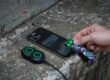

RFID wristbands have moved from pilot novelty to operational standard in high-volume venues and clinical environments. For finance and operations leaders, the discussion has shifted from “does the technology work?” to “how fast will it pay back?” A strong RFID wristband ROI model compares hard savings—labor, loss, consumables, and patient safety events—against total cost of ownership, Incluido RFID wristbands, RFID reader modules, integration, training, and support.
This guide focuses on two sectors where payback is most measurable: events and hospitals. In both cases, the largest ROI drivers are not the wristband itself, but the data capture and workflow changes enabled by the wristband.
The technology embeds a chip in a wearable credential. In events, the wristband becomes an access credential and payment token. In hospitals, it becomes a positive patient identifier at the bedside. The common thread is that the wristband triggers a digital record at the moment of scanning, eliminating manual data entry and enabling real-time reporting.
Why RFID Wristband ROI Is Different from a Technology Purchase
RFID is not a line-item hardware purchase. It is a process change. That means the strongest business cases do not start with RFID cost per unit; they start with the current cost of manual identification, reconciliation, and error correction. Once those baseline costs are documented, a procurement team can evaluate RFID as a replacement process rather than an incremental expense.
For events, the baseline includes printed tickets, manual ID checks, cash handling, and gate staffing. For hospitals, it includes patient re-registration, wristband reprints, medication administration checks, and equipment searches. In both settings, the wristband is the physical credential that automates those manual steps.
The ROI Formula for RFID Wristband Deployments
RFID wristband ROI (%) = [(Annual quantified benefits − Annual total cost of ownership) ÷ Annual total cost of ownership] × 100
The payback period is more intuitive for executive reviews: divide the initial implementation cost plus first-year operating cost by annual net benefit. Many organizations use a five-year NPV model, but operations teams often focus on a 12- to 24-month payback threshold.
Event RFID Payback: Access, Cashless, and Re-Entry
Festival and venue operators typically evaluate event RFID payback through three cost centers: credential issuance, gate operations, and on-site revenue. Multi-day festivals and large venues often deploy reusable RFID silicone wristbands for multi-day access and cashless payments, while single-day activations may use RFID disposable paper wristbands to reduce onboarding friction.
Access control is the most immediate source of payback. Traditional gate operations rely on manual ticket inspection, paper stubs, or barcode scanning that requires line-of-sight. RFID does not require line-of-sight and can read a wristband in milliseconds, even when the attendee is moving. This throughput improvement translates directly into fewer gate staff hours, shorter queues, and better crowd flow.
The payback logic is straightforward. If a wristband reduces gate staff from eight lanes to four, the labor savings alone may cover the hardware and integration cost within a single season. When cashless payments are active, the venue also captures incremental spend.
Cashless and Food & Beverage ROI
Cashless wristbands tend to deliver stronger payback than access-only deployments because the revenue lift accrues directly to the event operator. Concessions, bars, merchandise, and top-up stations all benefit from faster transaction times. Operators often see higher average per-attendee spend because the friction of cash or card handling is removed. For a deeper integration view, read our guide on cashless festival payments with RFID wristbands.
Event RFID Benchmark Metrics
The following planning benchmarks are used by event operators to estimate event RFID payback. Actual results depend on layout, staffing rates, Asistencia, and cashless adoption:
| Metric | Planning benchmark | Main ROI impact |
|---|---|---|
| Gate scan time | 1–3 seconds per RFID read vs. 10–20 seconds manual | Labor, queue reduction |
| On-site spend lift | 15–30% higher per-attendee spend with active cashless | Gross revenue |
| Credential loss or fraud | Near elimination of duplicate/counterfeit access | Revenue protection |
| Box office reconciliation | 50–80% faster | Back-office labor |
For a 50,000-attendee multi-day festival, even a 10% lift in on-site spend can be material. If average cashless spending increases by $8 per attendee, Es decir $400,000 in additional gross transaction volume before merchant fees. While not all of that is net revenue, the cash flow benefit supports faster event RFID payback.
Multi-day re-entry and camping zones add another layer of value. Wristbands can be encoded with access tiers, vehicle passes, and parent/child linking. This reduces manual checks at campgrounds and staging areas. Operators should include these secondary access gates when calculating labor savings.
Hospital RFID ROI: Patient Safety, Asset Visibility, and Nursing Time
Hospital leaders typically build RFID business cases around four benefit categories: positive patient identification, medication administration safety, mobile asset utilization, and inventory/waste reduction. Hospital RFID wristbands support bedside scanning and patient tracking, while compatible reader modules integrate with electronic health records to create an end-to-end audit trail.
Positive patient identification is the clinical foundation. When a nurse scans a wristband before medication administration, the system can match the patient, medication, dose, and time against the physician order. This reduces the risk of administration errors and creates a defensible audit trail for compliance. The financial benefit appears as avoided adverse events, lower malpractice exposure, and faster nursing workflows. For a closer look at clinical workflows, read our article on how US hospitals cut medication errors with RFID patient wristbands.
Hospital RFID Benchmark Metrics
The following planning benchmarks are commonly used in hospital RFID ROI models. They are indicative ranges, not guarantees, and should be adjusted to local labor rates and patient volumes:
| Metric | Planning benchmark | Main ROI impact |
|---|---|---|
| Medication administration time | 20–40 minutes saved per nurse per shift | Labor cost avoidance, higher patient contact |
| Patient ID errors | 50–80% fewer manual identification errors | Safety, regulatory compliance |
| Mobile asset utilization | 10–30% reduction in lost or idle equipment | Fewer rental/lease purchases |
| Wristband reprint requests | 60–80% fewer duplicate registrations | Admissions and HIM staff time |
How to Calculate Hospital RFID Cost Savings
For a hospital, hard savings usually come from nursing time, avoided medication events, asset recovery, and reduced form/wristband waste. A business case should compare the cost per patient encounter before and after RFID: manual verification time, reprints, equipment search time, and report preparation. Hospital RFID ROI improves when RFID is embedded into existing admission and medication administration workflows rather than treated as a standalone project.
Por ejemplo, if a 400-bed hospital can recover 15 minutes per nurse per shift through faster patient identification and medication verification, the daily time savings may be significant across dozens of units. The same infrastructure can support equipment tracking, infant security, and blood product verification, which spreads fixed costs across multiple departments.
Asset tracking is often the fastest secondary payback. Mobile equipment such as infusion pumps, wheelchairs, and telemetry packs is frequently lost or hoarded. RFID-enabled asset management reduces search time and prevents unnecessary rental or replacement purchases. Hospitals can start with patient wristbands and later extend to RFID laundry tags for linen and uniform tracking.
Building a Defensible RFID Wristband ROI Model
Use a structured five-step approach:
- Document the baseline. List current labor hours, consumable costs, loss rates, and error rates for the process you plan to automate.
- Map RFID to the process. Identify where wristbands will replace manual checks and where existing systems will integrate.
- Calculate total cost of ownership. Include wristbands, lectores, software, installation, training, and annual support.
- Quantify hard benefits. Use unit cost × volume changes for labor, reprints, asset recovery, and revenue capture.
- Run scenarios. Present conservative, likely, and optimistic cases with a five-year horizon.
For procurement teams comparing options, our guide to silicone vs PVC RFID wristbands can help align material selection with usage cycles and budget.
For event operators, a simple test is to calculate the effective cost per attendee per day. A reusable wristband that lasts for a three-day festival and can be reissued for future events changes the unit economics significantly compared with a single-use paper ticket. For hospitals, the better metric is cost per patient encounter or cost per medication administration, because those align with clinical operations and staffing budgets.
What Influences RFID Wristband Payback Period
Payback period varies based on five factors: deployment scale, existing infrastructure, integration depth, staff training, and reusability. Large events and hospitals with existing reader infrastructure tend to reach payback faster because the marginal cost of adding wristbands is lower. Organizations that are replacing barcode or manual systems typically see a more immediate shift in labor costs than those adding RFID to a greenfield process.
Why RFID Cost Savings Are Often Understated
Traditional ROI models favor hard, auditable line items. But many wristband benefits are indirect: faster patient discharge, improved attendee experience, reduced security incidents, and stronger compliance documentation. RFID cost savings also appear in avoided capital spending—for example, when RFID asset tracking reduces the need to lease or purchase mobile equipment. These benefits should be listed separately in the business case as “qualitative and risk-based benefits” so decision-makers can see the full picture without inflating the core financial model.
Common ROI Pitfalls to Avoid
- Comparing unit price only. A lower-cost wristband may have higher failure rates or require more staff intervention.
- Ignoring reusability. For multi-day events, reusable wristbands change the effective cost per day.
- Overlooking integration costs. ERP, EHR, control de acceso, and POS integration often determine total implementation cost.
- Failing to align metrics with P&L owners. If gate labor savings are in one budget and RFID investment is in another, the business case needs sponsorship across departments.
From Business Case to Procurement
Executives should ask suppliers for sample wristbands, read range tests, and a total cost of ownership worksheet. For event and hospital deployments, the difference between good and poor performance often comes down to reader placement and wristband material. Request samples that match your actual environment, including wet conditions, multi-day wear, and infection-control requirements. A credible supplier will help you model both hard savings and implementation risk before you commit.
What is a realistic payback period for RFID wristbands at a multi-day festival?
Most event operators model a 12–24 month payback, but a single large festival season can cover initial costs when access control labor savings and on-site spend lift are included. Reusable wristbands and high cashless adoption tend to shorten the payback period.
How do hospitals calculate RFID wristband ROI?
Hospitals compare the cost per patient encounter before and after RFID, including nursing time, wristband reprints, medication administration checks, equipment search time, and avoidable adverse events. The same infrastructure can be extended to asset tracking and laundry tracking to improve total return.
What are the biggest cost savings from RFID in events?
The largest savings typically come from gate labor reduction, faster cashless transactions, lower counterfeit access, and faster box office reconciliation. Revenue lift from higher on-site spend is often the most material financial benefit.
How many uses are needed for reusable RFID wristbands to break even?
Break-even depends on single-use cost, read range, and replacement rate. In multi-day festival environments, reusable wristbands often become cost-effective after two to four days of use or when they can be reissued across multiple events.
How does RFID wristband ROI compare with barcode or manual systems?
RFID reads without line-of-sight, is faster, and can support cashless payments, access tiers, and patient identification in one credential. Manual and barcode systems are usually cheaper per unit but create higher labor costs and more reconciliation work.
Start Your RFID Wristband ROI Model with a Qualified Team
Whether you are planning a multi-day festival, hospital deployment, or large venue rollout, RFIDHY supports executive teams with product selection, sample testing, and engineering review. Contact our team to discuss your current costs, timeline, and ROI targets.