
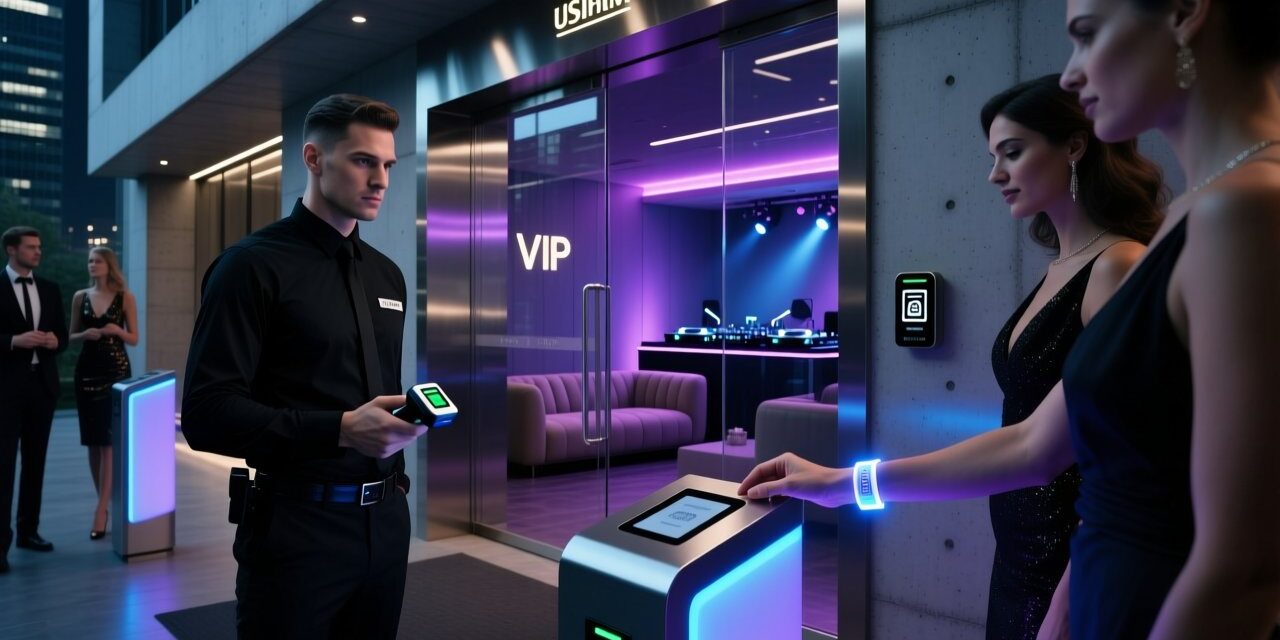
High-volume nightclubs and bars need one credential that can handle age-gated entry, fire-code capacity limits, VIP zone permissions, and cashless payments without slowing service. A nightclub RFID wristband connects an ID-checked guest profile to secure, tap-based interactions across the venue. For operators, that means faster queues, fewer access disputes, and better visibility into guest behaviour. As venues compete for high-value customers, the wristband also becomes part of the premium experience: a contactless credential that works from the entrance to the bar to the VIP section.
This venue-operations guide covers the practical ways nightlife operators can use RFID wristbands for age verification, capacity control, VIP access, cashless payments, anti-fraud, staff identification, and incident response. It is written for club owners, bar operators, venue security managers, and hospitality groups managing age-gated entry and premium service.
Why Nightlife Venues Are Moving to RFID Wristbands
Paper stamps fade, laminated passes are easy to share, and manual clicker counts leave venues exposed to compliance risk. A bar wristband RFID solution is designed for dark, crowded, and wet environments. It remains readable throughout the night, supports rapid scans, and carries data that paper simply cannot. For operators who already use door ID scanners, the wristband becomes a natural extension of that system.
Age Verification at the Door: Wristbands Linked to ID-Checked Profiles
Age verification is the foundation of any age-gated venue operation. Avec un bar age verification wristband, door staff scan a government ID first, verify the date of birth, and only then issue an encoded wristband. The wristband stores a unique identifier that links back to the ID-checked profile—not the full personal data—so privacy is maintained while the venue keeps a reliable verification trail. This approach also gives security a consistent way to confirm age tier at re-entry or internal checkpoints without asking guests to handle an ID again.
Door Workflow After RFID Integration
- Scan government ID and validate age.
- Create or update a guest profile in the door system.
- Encode the wristband with the unique profile ID and access tier.
- Tap the wristband at the entry reader to log entry time.
- Record occupancy and zone permissions in real time.
Faster Door Entry: Tap-In Reduces Queues and Improves Curb Appeal
A nightclub access control RFID setup uses a reliable RFID reader module at the door. Instead of folding tickets, matching stamps, or manually recording guests, staff simply confirm the wristband with a tap. Club entry RFID workflows can cut entry time to a few seconds per guest, which keeps queues moving and makes the venue look well-run from the street. Faster entry also reduces crowd congestion outside, which contributes to a safer arrival area and a better first impression for walk-up guests.
Real-Time Capacity Control for Fire-Safety Compliance
Occupancy limits are non-negotiable for licensed venues. An age-gated venue RFID wristband system gives operators a live count based on tap-ins and tap-outs. When a zone reaches its limit, managers can pause entry or redirect guests to another area. This real-time data supports fire-safety compliance, reduces manual counting errors, and provides a clear log for inspections. Zone-based capacity control is particularly useful for multi-room clubs, rooftop bars, and venues with separate general admission and VIP areas.
VIP Access and Bottle-Service Tiers
A VIP nightclub wristband carries access permissions, not just identification. The same wristband can control entry to mezzanine areas, private rooms, and bottle-service sections. Staff scan the wristband to confirm the tier, reducing access disputes and protecting premium inventory. Color coding can distinguish general admission, guest-list, artist, and backstage groups while the RFID data remains the source of truth. For bottle-service teams, the wristband also helps verify which guests belong at which table without interrupting the experience.
Cashless Bar: Wristband Linked to Tab or Prepaid Account
Cash handling slows service and increases security risk. A nightclub cashless wristband links to a prepaid account or a credit card tab at the point of sale. Bartenders scan the wristband, confirm the order, and close the transaction without handling cash. This increases bar throughput, reduces disputes, and gives operators better spend visibility while guests avoid carrying wallets on the floor. Post-event reconciliation is also faster because every transaction is tied to a unique wristband record.
PVC Wristbands: Durable and Waterproof for Nightlife Wear
Nightlife credentials must survive sweat, spills, condensation, and repeated scanning. RFID disposable PVC wristbands are a practical choice because they are waterproof, lightweight, and comfortable for multi-hour wear. A tamper-evident closure also supports anti-fraud policies by making unauthorised removal visible. For venues that want brand consistency, the PVC surface can be printed with logos, tier colors, and sequential codes without compromising readability.
Anti-Fraud: Preventing Underage Re-Entry and Wristband Sharing
An age verification event RFID wristband resists the most common nightlife fraud patterns. Because each wristband is tied to a unique profile created at the ID check, a guest cannot pass it to an underage friend without the system detecting a mismatch at re-entry. If a wristband is cut or removed, the closure shows tampering and the credential can be invalidated. Door staff can flag duplicate use or out-of-policy access in real time, making the venue less attractive to misuse.
Staff Identification and Incident Response
Color-coded wristbands help security distinguish bartenders, runners, management, and patrons at a glance. For back-of-house areas, managers can issue backup RFID cards with broader zone permissions. If an incident occurs, scanning a patron’s wristband instantly provides the ID-linked profile, entry time, and access tier, giving security accurate information for faster resolution. This reduces guesswork during peak hours and supports clearer reporting after the event.
Integration with POS and ID Scanning Systems at the Door
RFID works best when door scanning software, POS terminals, and access readers share one database. When a patron’s ID is scanned and verified, the system writes the relevant permissions to the wristband; bar terminals then use the same credential for payment or tab lookup. This integration removes manual data entry and creates a single source of truth for guest activity. Many venues also use Étiquettes RFID embedded in staff equipment or bottle-service assets to align inventory and access data with the same infrastructure.
| RFID Wristband Function | Nightclub Use Case | Operational Benefit |
|---|---|---|
| Age verification | ID-linked profile at door | Reliable age-gating and re-entry control |
| Contrôle d’accès | Tap-in entry and zone permissions | Faster queues and fewer access disputes |
| Capacity control | Real-time occupancy counting | Fire-safety compliance and safer crowds |
| VIP tiering | Premium zone and bottle-service access | Protected revenue and clearer service levels |
| Cashless payment | Bar tab or prepaid account | Higher bar throughput and less cash risk |
| Staff identification | Color-coded staff vs patron bands | Faster security response and role clarity |
For nightclub and bar operators, moving from paper stamps to RFID wristbands is not a technology gimmick—it is an operational upgrade that touches entry, compliance, revenue, and safety. When the door, bar, and security teams work from the same wristband data, the venue runs more smoothly and guests experience fewer interruptions.
Do RFID wristbands replace physical ID checks at the door?
non. They supplement the ID check. Age is verified from a government ID first, and the wristband stores a unique credential that references that checked profile. The physical wristband should not be treated as proof of age.
Can one wristband handle both VIP access and cashless payments?
Oui. When the door system and POS are integrated, the same nightclub RFID wristband can carry access permissions and a payment link to a tab or prepaid account.
How do PVC RFID wristbands hold up during a full night of service?
RFID disposable PVC wristbands are waterproof, tear-resistant, and comfortable for extended wear. Tamper-evident closures support anti-fraud policies.
What happens if a wristband is shared or transferred?
The wristband is linked to a unique guest profile. Re-entry scans compare the wristband ID against the door log, and tamper-evident closures make removal visible. Duplicate or mismatched use can be flagged instantly.
Does RFID capacity control require separate infrastructure?
It typically uses the same entry readers and wristband data as access control. Operators can configure real-time counts by zone and set limits based on fire-safety requirements. For system planning, contact RFIDHY.
Plan Your Nightlife RFID Wristband Rollout
RFIDHY supplies RFID disposable PVC wristbands for nightclubs, bars, and age-gated events. Our team can help you evaluate door-reader integration, cashless workflows, and custom printing requirements.
Contact RFIDHY to discuss your venue’s age verification, VIP access, and capacity-control requirements.