The Queue Conundrum in Modern Theme Parks
Managing queues remains one of the most persistent challenges for theme park operators. Long wait times not only frustrate guests but also directly limit ride throughput and revenue opportunities. Traditional linear queuing consumes valuable park real estate and keeps visitors idle—precisely when they could be dining, shopping, or engaging with other attractions. For parks aiming to elevate guest satisfaction while driving profitability, virtual queue systems powered by RFID wristbands present a strategic transformation.
By replacing physical queues with a digital reservation model, parks can redistribute crowd flow, reduce perceived wait times, and unlock new upselling channels. This operational guide explores how RFID-based virtual queuing works, its measurable business impact, and the best practices for implementation.
Traditional Queue vs. Virtual Queue: A Side-by-Side Comparison
Before diving into the technology, it’s essential to understand the operational difference between legacy queuing and an RFID wristband virtual queue system. The table below highlights key dimensions that directly affect guest experience and park revenue.
| Aspect | Traditional Queue | Virtual Queue with RFID Wristband |
|---|---|---|
| Guest Experience | Standing in line for extended periods; limited mobility | Freedom to explore the park; notified when ride is ready |
| Wait Time Perception | High – physical discomfort amplifies frustration | Low – guests engage in other activities while waiting virtually |
| Staffing Needs | Requires queue monitors, line attendants | Streamlined; fewer staff needed for crowd control |
| Revenue Opportunities | Limited – time spent queuing cannot be monetized | High – guests are free to visit shops, restaurants, and kiosks |
| Data Insights | Manual counts; minimal behavioral data | Real-time guest flow analytics; ride preference patterns |
| Access Control | Visual ticket checks; slower boarding | Tap-to-join and instant validation via RFID |
How RFID Wristband Virtual Queue Systems Work
At the core of any modern virtual queuing system lies RFID technology. Each wristband contains a passive UHF RFID tag with a unique identifier that communicates with readers installed at ride entrances and throughout the park. When combined with central queue management software, this hardware creates a seamless, hands-free experience for guests.
Tap-to-Join at Ride Entrance
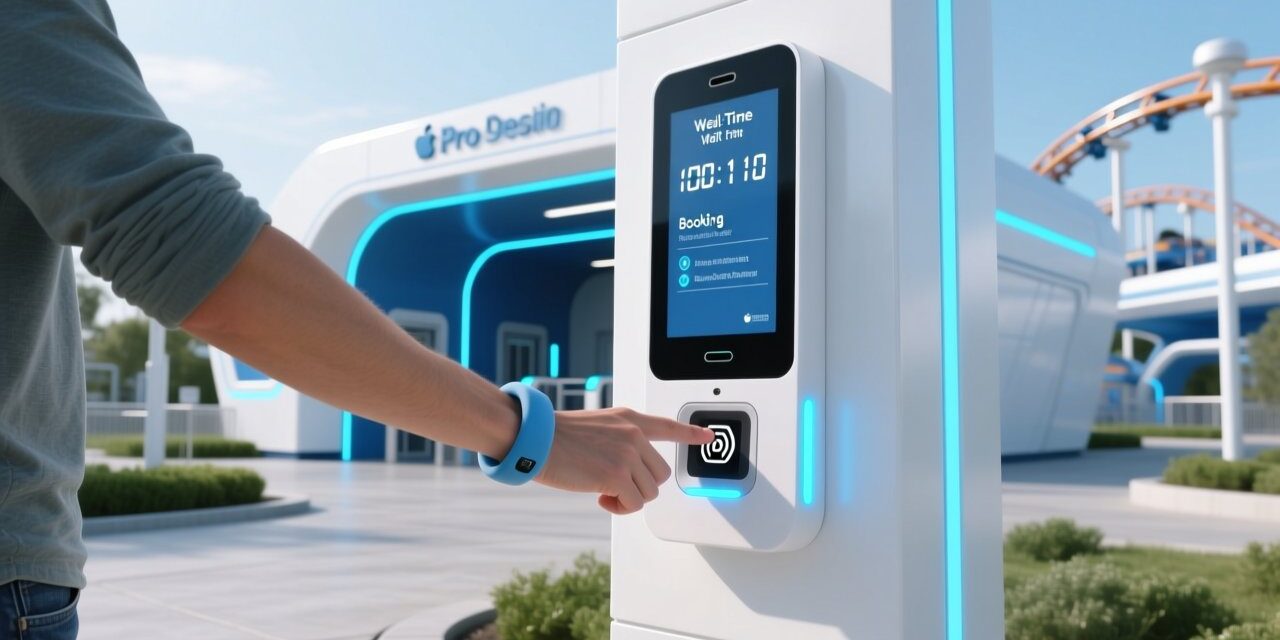
Instead of standing in a physical queue, guests simply tap their RFID wristband on a reader at the ride entrance to join the virtual queue. The system records their party size and assigns a spot in the line without any physical wait. Fixed RFID readers installed at each ride portal can detect wristbands from a distance, enabling contactless and rapid entry. This reduces congestion at entry points and allows staff to focus on safety and operational efficiency.
Automatic Return Notification
Rather than requiring guests to check screens or apps constantly, the RFID wristband can incorporate LED lights, vibrations, or trigger a mobile app push notification when their ride is ready. This automatic callback mechanism ensures guests never miss their slot while they are enjoying other areas of the park. The system calculates real-time ride cycles and alerts guests a set number of minutes before boarding, drastically improving compliance and reducing no-shows.
Multi-Ride Reservation per Wristband
Advanced virtual queue platforms allow guests to hold reservations for multiple rides simultaneously—up to system-defined limits. A family can book a roller coaster time slot, then immediately reserve a water ride for later, all stored on the same RFID wristband. This reduces the stress of planning and keeps guests engaged throughout the day. Operators can configure rules to prevent abuse, such as requiring a completed ride before booking a second of the same category.
Priority Pass for VIP Ticket Holders
RFID wristbands can be encoded with different access tiers. VIP guests or annual pass holders receive preloaded priority access—their wristband automatically grants a shorter virtual queue or expedited entry. The system seamlessly differentiates between guest tiers at the tap-in point, eliminating the need for manual checks and elevating the experience for high-value customers.
Premium Upsell: Pay-for-Skip Queue Access
Perhaps the most direct revenue driver of virtual queuing is the ability to offer paid queue-skip options. Through the RFID wristband or companion app, guests can purchase one-time Fast Pass credits or upgrade their ticket to include priority access for popular attractions. NFC chips embedded in newer wristbands enable secure tap‑and‑pay functionality, making upsells frictionless. Even modest uptake rates have been shown to add substantial per‑capita revenue.
Operational and Revenue Benefits of RFID Virtual Queuing
The transition to a virtual queue model delivers measurable gains that go far beyond happier guests.
Wait Time Reduction: 30–50% Improvement
Industry benchmarks indicate that well-implemented virtual queues can slash perceived and actual wait times by 30% Para 50%. By eliminating the physical standing time and smoothing rider flow, hourly throughput increases. Even if the absolute ride capacity remains similar, guests perceive a dramatically shorter wait because they are not idle. This improvement directly correlates with higher guest satisfaction scores and positive online reviews.
Capacity Optimization per Ride per Hour
Real-time data from RFID wristband reads allows ride operators to fine-tune dispatch intervals. The system can detect when a virtual queue for a specific ride is underutilized and prompt nearby guests via their wristbands to drop in. Conversely, when demand spikes, the system can adjust call-back windows to maintain a steady flow. This dynamic load balancing can boost ride capacity by 5–10% without any physical infrastructure changes.
Guest Flow Analytics: Ride Pattern Data
Every tap generates a timestamped data point. Over time, the system builds a rich picture of guest behavior: which rides are most popular at which times, route sequences, dwell times, y más. Operations teams can use these insights to schedule ride maintenance during low-demand windows, reposition food carts to match traffic patterns, and design future attraction investments around proven demand. The analytics dashboard becomes a central pillar of data‑driven park management.
Revenue Boost: F&B Spending While Waiting
When guests are not physically confined to a queue, they wander—and they spend. Parks with virtual queuing consistently report a significant lift in food & beverage and retail revenue. Freed from the line, guests visit concession stands, play midway games, and explore merchandise shops. Even a modest increase in per‑capita in‑park spending directly drops to the bottom line, often funding the entire virtual queue infrastructure within a single season.
Choosing the Right RFID Wristband for Your Park
The success of a virtual queue system hinges on the reliability and comfort of the wristband itself. For multi‑day use in water parks, adventure parks, or resorts, RFID silicone wristbands are the optimal choice. They are waterproof, artículo, and can be fully customized with brand colors and logos. Unlike disposable paper or vinyl bands, silicone wristbands can be reused across visits, reducing waste and long‑term costs. RFIDHY’s extensive range of form factors—including fabric woven, disposable PVC, and plastic wristbands—ensures a perfect match for any park’s specific operational needs and guest profile.
Implementation Best Practices
- Start with a pilot: Roll out the virtual queue on 2–3 popular rides first, gather data, and refine the system before a park‑wide launch.
- Integrate with existing POS and ticketing: Ensure the RFID wristband acts as a single identifier across entry, Pago, and ride access to create a unified guest journey.
- Educate guests and staff: Deploy clear signage, video tutorials, and staff training to make the tap‑to‑join process intuitive.
- Design a flexible rule engine: Allow operations managers to configure booking limits, return times, and upsell pricing in real time from a centralized dashboard.
- Monitor and iterate: Use the analytics to continuously adjust ride allocations, upsell offerings, and staffing levels.
Conclusión: From Queue Frustration to Revenue Engine
RFID wristband virtual queue systems represent far more than a guest convenience—they are a strategic tool for transforming park operations. By reducing wait times by up to 50%, unlocking incremental in‑park spending, and providing actionable guest flow data, the technology directly addresses the twin goals of enhancing experience and maximizing revenue. For theme park leaders ready to move beyond passive queuing, the path forward is clear: arm every guest with a smart RFID wristband and let the data do the work.
FAQ
How do RFID wristbands communicate with the virtual queue system?
Each RFID wristband contains a microchip and antenna that communicate with readers installed at ride entrances and key zones. When a guest taps or approaches a reader, the unique ID is transmitted to the queue management server, which records the reservation and later triggers return notifications.
Can RFID wristbands be reused for multi-day visits?
Sí. Wristbands made from materials like silicone or fabric are designed for repeated use over an entire season or across multiple visits. They can be reactivated at the start of each visit, reducing waste and per‑guest cost.
What RFID frequency is best for theme park wristbands?
Most parks use UHF (860–960 MHz) for its longer read range (up to several meters), which is ideal for automatic detection at ride portals. HF/NFC (13.56 MHz) is sometimes combined for tap‑to‑pay and shorter‑range interactions. A dual‑frequency wristband can offer the best of both worlds.
How does the system handle lost wristbands?
Lost wristbands can be immediately deactivated from the central management console. Their unique ID is blacklisted, preventing unauthorized boarding. Guests can replace a lost wristband at guest services, where the new band is linked to their existing reservations and account balance.
Ready to Transform Your Park’s Queue Experience?
RFIDHY specializes in durable, fully customizable RFID wristbands designed for the rigors of theme parks, Parques acuáticos, and entertainment venues. Whether you are launching a pilot virtual queue system or upgrading an existing one, our team can guide you through the selection and integration process.
Contact RFIDHY today to discuss your requirements and request a sample kit tailored to your park’s needs.