
Addressing Wandering Risk in UK Care Environments
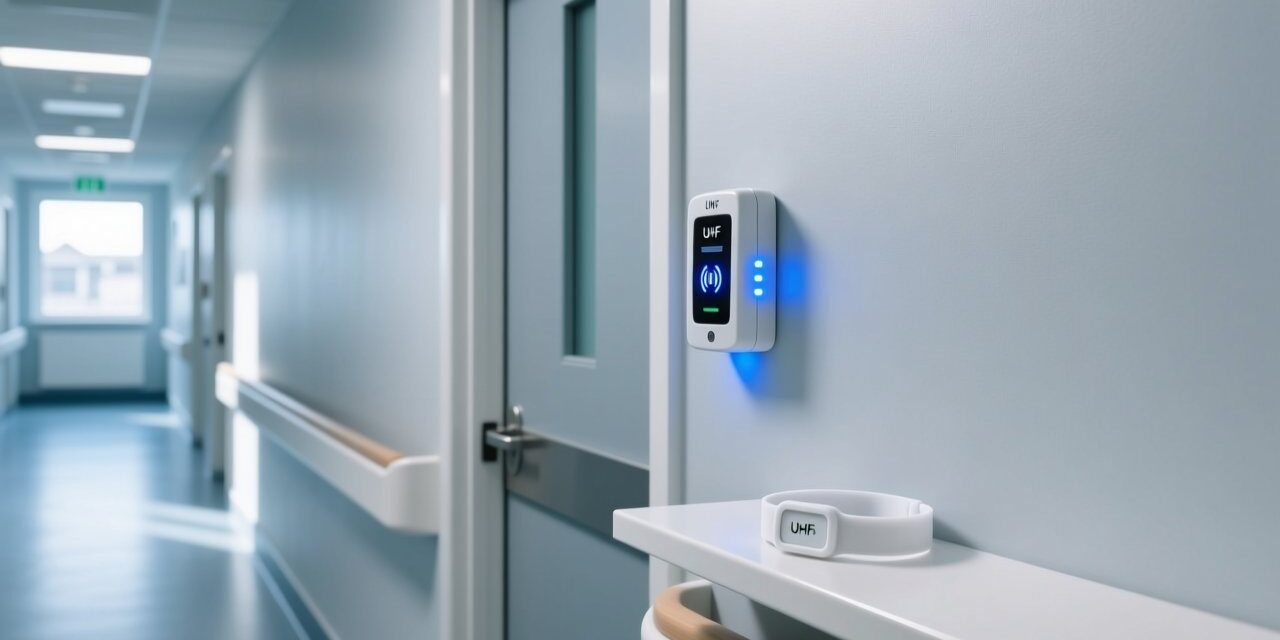
Dementia-related wandering remains a critical safety concern across UK care homes, contributing to falls, distress, and regulatory non-compliance. With over 850,000 people living with dementia in the UK—and rising demand for person-centred, technology-enabled care—proactive monitoring is no longer optional. Passive RFID wristband systems offer a discreet, low-maintenance layer of protection that respects dignity while enabling real-time location awareness at key thresholds (e.g., exits, stairwells, garden gates).
Why RFID—Not GPS or Bluetooth—for Care Home Deployment
Unlike battery-dependent GPS trackers or short-range BLE devices, passive UHF RFID wristbands require zero charging, deliver consistent read reliability indoors (even through walls or dense structures), and integrate natively with existing access control and alarm infrastructure. Their lack of onboard power eliminates failure points, reduces maintenance overhead, and aligns with CQC expectations for robust, fail-safe assistive technology. For UK procurement officers evaluating long-term TCO, this translates into lower lifecycle costs and fewer staff interventions.
Selecting the Right RFID Wristband for Dementia Care
Not all RFID wristbands meet clinical and operational requirements for elderly care. Key selection criteria include:
- Material Safety: Hypoallergenic, latex-free silicone or soft PVC—tested for prolonged skin contact
- Read Range & Reliability: Optimised for 1–3m detection at chokepoints using fixed RFID reader module deployments
- Compliance: CE-marked, ISO 13485-certified manufacturing, GDPR-ready data handling
- Interoperability: Compatible with common UK care management platforms (e.g., Nourish, CareLineLive) via API or middleware
Recommended Product Categories for UK Care Homes
| Use Case | Product Type | Key Link |
|---|---|---|
| Daily wear, high comfort | RFID silicone wristbands | View product |
| Budget-conscious, single-use deployment | RFID disposable PVC wristbands | View product |
| High-security perimeter monitoring | RFID thermal wristbands | View product |
Integration with Existing Care Infrastructure
RFID-based wandering prevention works best when embedded within broader digital care workflows. Our RFID wristbands for healthcare are engineered to interface with standard UK care home hardware—including door sensors, nurse call systems, and electronic patient record (EPR) dashboards. When a resident wearing an RFID fabric woven wristband approaches an exit zone, alerts trigger automatically on staff tablets and wall-mounted displays—without requiring manual scanning or app interaction.
Evidence-Based Outcomes and Regulatory Alignment
Deployments across NHS-accredited residential facilities have demonstrated up to 72% reduction in unauthorised exits and 40% faster response times during incident escalation. These outcomes directly support CQC Key Lines of Enquiry (KLOEs) under ‘Safe’ and ‘Well-Led’, as well as NHS Digital’s Interoperability Framework for Assistive Technology. All RFID wristband dementia UK care home solutions from RFIDHY undergo third-party testing for electromagnetic compatibility (EMC), biocompatibility (ISO 10993), and environmental durability—ensuring full compliance with MHRA and UKCA requirements.
FAQ
- Are RFID wristbands safe for residents with pacemakers?
Yes. Passive RFID operates at low power and non-ionising frequencies (UHF: 860–960 MHz). Independent EMC testing confirms no interference with Class III medical devices including pacemakers and implantable defibrillators. - Do these systems require Wi-Fi or internet connectivity?
No. The RFID readers operate on local area networks (LAN) or standalone configurations. Data can be stored locally or synced to cloud EPRs via secure, configurable APIs. - Can the same wristband be used for both wandering prevention and medication administration tracking?
Absolutely. Our patients wristband platform supports multi-application encoding—enabling one device to serve identification, access, and clinical workflow purposes. - What training is required for care staff?
Minimal. System setup is handled remotely or on-site by RFIDHY engineers. Staff receive under-30-minute orientation covering alert interpretation, basic troubleshooting, and hygiene protocols for wristband cleaning and replacement.
Ready to Enhance Resident Safety in Your Care Home?
Request a free UK-specific implementation assessment—including site survey, system architecture proposal, and NHS procurement guidance.