 Gli allevamenti di animali sono sempre stati inclini a scoppiare epidemie animali. Abbiamo assistito allo scoppio dell'influenza aviaria, Influenza suina H1NI, Nipah, Ebola e ora COVID-19.
Molti paesi hanno intrapreso azioni serie per controllare ulteriori epidemie e hanno regolamentato la gestione del bestiame e l’allevamento degli animali. Various technologies are being used for identification and monitoring of livestock and proper management of animal husbandries. There are few must use products by Animal Husbandry post COVID.
The most important change that has been made to the livestock controlling and monitoring is the use of RFID technology. The RFID enabled tags use the EID number or the management number on the button that is placed on the animal. Le informazioni sul tag vengono lette e memorizzate con l'aiuto delle onde radio. This technology is less time consuming, more economical and accurate.
Why Animal Husbandry uses RFID tags?
- Applicazione a vita: RFID tags stay attached on the animal for the lifetime and don’t fall out or become unreadable when covered in dirt or mud. La maggior parte di questi tag sono impermeabili e resistenti agli urti. I tag RFID semplificano la gestione dell'azienda agricola e richiedono meno tempo.
- Facile implementazione: Su ogni tag è stampato un numero identificativo univoco che può essere facilmente scansionato tramite un lettore EID. Non è richiesta alcuna documentazione. Tutto il processo è computerizzato migliorando l'accuratezza dei dati. A differenza dei tag visivi, Le etichette RFID possono essere scansionate anche a distanza e non richiedono che l'animale stia fermo, oppure un contatto visivo tra lettore e tag. I tag RFID sono più sicuri e riducono al minimo le possibilità di errori.
- Conveniente: RFID tags are cost effective and more efficient. La loro caratteristica di lunga durata li rende più economici rispetto ad altri tag che devono essere sostituiti a causa dell'usura e della caduta dall'animale. La tecnologia richiede meno intervento umano. Quindi, riduce anche il costo della manodopera.
- Monitoraggio facile: Gli agricoltori e i proprietari di bestiame possono monitorare la salute dei loro bovini dalla nascita fino alla macellazione. Tieni sotto controllo eventuali malattie degli animali, traccia i movimenti degli animali senza disturbarli e registra il loro trasporto da un unico dispositivo.
- 5. Government Regulation: Many countries have made it mandatory to use the RFID tags in order to quickly trace an outbreak of livestock diseases. Il tradizionale, Il sistema di tracciamento non elettronico può impiegare diversi mesi per tracciare tali focolai.
Here are the MUST USE RFID products by Animal Husbandry
- Etichetta auricolare RFID: RFID ear tag is a plastic or metal object that carries an identification number on it and is placed in the ears of an animal. It carries a fifteen-digit unique Animal Identification Number (AIN) insieme a pochi altri dettagli come il numero di identificazione della proprietà. L'AIN è composto dal codice azienda di 3 cifre e dal numero individuale dell'animale di 12 cifre rimanenti. Può essere applicato manualmente o mediante un applicatore di marca auricolare. Un lettore ID viene utilizzato per scansionare e raccogliere i dati da questi tag, che viene poi scaricato e archiviato in un computer. Questo processo riduce le possibilità di errore e tiene traccia di tutti i dati relativi a un animale in un altro.
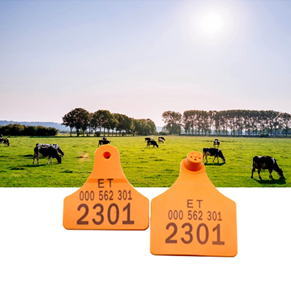
RFIDHY Ear Tag sono disponibili in frequenze diverse da 134,2 KHz, 125KHz fino a un minimo di 860 MHz e 960 MHz. The waterproof and shock-resistant RFID tag is designed in a way to implement the technology efficiently and hassle-free. Con a 100% garanzia di prestazione, RFIDHY’s ear tag last for the lifetime of the animal. The electrical parts of the RFIDHY Ear Tag is covered by TPU material which is convenient and strong in the harsh environment too. RFIDY ti offre il vantaggio di scegliere i numeri ID secondo le tue esigenze. Puoi anche scegliere il colore e il contenuto che desideri stampare sulle etichette. Questi tag certificati ISO-11784/11785 hanno una garanzia di tre anni.
- Etichetta in vetro RFID: Glass Tag is essentially a tiny transponder that stores information and emits radio frequency. It comes in the form of a miniature capsule not bigger than grain of rice. The capsule contains a microchip containing a unique code. Unlike ear tags that are placed on the animal body, glass tags are injected in the animal body like vaccines. The information on the tag is scanned with a RFID tag reader by scanning the surface of the animal skin. The reader captures all the details mentioned on the tag with accuracy.
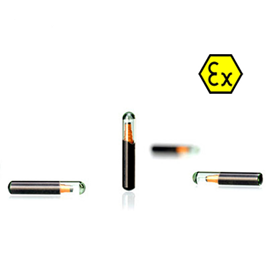
RFIDHY Glass Tube Tag is a glass RFID chip embedded transponder manufactured by fully automatic production technology thereby ensuring the consistency and reliability of its quality. It offers a variety of chip options in both low and high frequency. It has high Q Value and sensitivity that protects it from harsh environment. Being heat resistant and stable, it can be imbedded in a broad spectrum of potential enclosure material. It has unlimited resistance to water and chemical absorption. The tag has memory storage options from 64 bit read-only to 2048 bit read-write.
The RFID tags are recommended for cattle, pecora, goats, pigs and other pet animals. These tags are widely used in slaughter houses, poultry houses and hatcheries to identify and monitor the livestock. Track any disease and keep a check on their health. They are used in keeping records of the livestock movement, their feeding and vaccination schedules too. These features of RFID tags make them a must use product for the Animal Husbandry industry after the world recovers from COVID.