
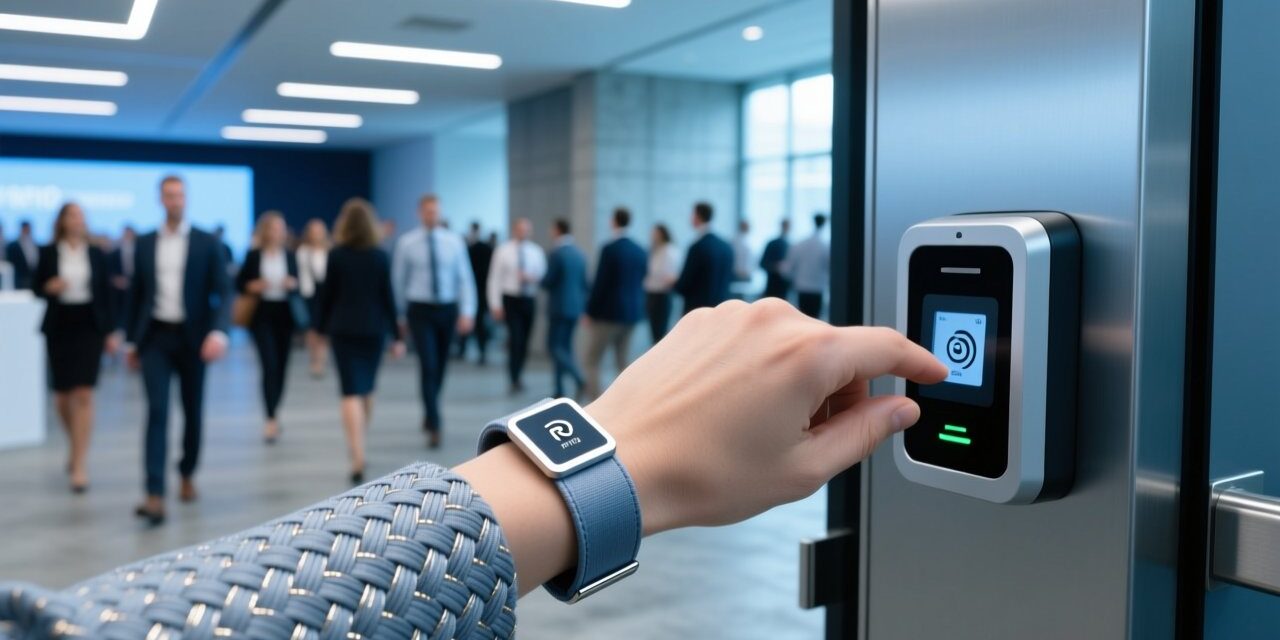
Multi-day music and cultural festivals lose revenue twice: first to ticket fraud at the gate, then to slow cash transactions inside the venue. RFID wristband fraud prevention combines secure admission credentials with cashless payment capability to close both leaks. This ROI-focused guide explains how music festival revenue RFID strategies reduce counterfeit ticket risk, stop gate-hopping and re-entry abuse, and lift on-site spend by 15–30%.
For festival organizers, ticketing managers, and revenue directors, the question is not whether RFID is interesting. It is whether the wristband investment returns more than it costs. This article builds that case with realistic fraud-loss assumptions, an illustrative cost-benefit table, and an integration roadmap.
The Real Cost of Festival Ticket Fraud
Fraud is not only a security issue; it is a direct margin leak. Common fraud types at multi-day festivals include:
- Counterfeit tickets: printed or digital copies that look valid but fail database verification.
- Ticket scalping: unauthorized resale, often with duplicated barcode credentials or inflated pricing.
- Gate-hopping: attendees bypass checkpoints or reuse one credential across multiple entries.
- Re-entry abuse: multiple people share a single ticket by passing it back through fences or exits.
Each fraudulent entry represents a full-price ticket sold again. Festival ticket fraud RFID controls close these gaps by giving every valid attendee a single physical credential that is much harder to copy, transfer, or reuse than a barcode. Festival scalping prevention RFID works by linking the wristband UID to the original purchase, making duplicated or unauthorized resale credentials ineffective.
How Encrypted RFID UIDs Prevent Counterfeit Tickets and Gate-Hopping
Every RFID chip embedded in a wristband carries a factory-encoded unique identifier (UID). This encrypted UID is not a simple serial number that can be rewritten with common cloning tools. The result is counterfeit festival ticket prevention at the credential level: each wristband has a unique non-clonable identifier that cannot be duplicated to create a working fake. Because the UID is tied to a specific ticket record, any clone attempt creates a mismatch at the gate.
Real-Time Validation at the Gate
Gate staff use fixed RFID readers to instantly check each UID against the ticketing database. Real-time validation means invalid, duplicated, or deactivated credentials are rejected in milliseconds without manual visual inspection. This maintains gate throughput while converting festival gate fraud detection from a guess into a database decision. Operators can see live admission counts, identify suspicious clusters, and respond before losses multiply.
Wristband Deactivation Blocks Stolen or Transferred Credentials
Because the UID is linked to a live ticketing record, operators can deactivate any wristband immediately. If a wristband is reported lost, stolen, or associated with fraud, festival staff can block it across access control and payment systems. Wristband deactivation is the operational tool that turns a physical credential into a controllable, revocable asset. For gate supervisors and roaming staff, RFID readers can be deployed in fixed lanes or as handheld units to spot-check credentials and identify blacklisted UIDs.
Why Tamper-Evident Fabric Wristbands Prevent Transfer Between Fans
Fabric wristbands are the preferred format for multi-day festivals because they are durable, comfortable, and visually customizable. More importantly, the tamper-evident clasp prevents transfer between fans: once locked, the clasp cannot be removed and reattached without visible damage. This blocks re-entry abuse and credential sharing, reinforcing the encrypted UID security at the physical level.
RFIDHY’s RFID fabric woven wristbands combine a woven fabric band with an embedded RFID chip and a locking closure. The result is a credential that stays with the original attendee for the entire event while supporting scan-based access control and cashless payments. For shorter events or tighter budgets, disposable paper or PVC options exist, but fabric delivers the best balance of durability, comfort, and transfer resistance for multi-day festivals.
From Fraud Prevention to Festival Cashless Revenue Uplift
Preventing fraud stops revenue leakage, but RFID also increases the revenue each fan generates inside the venue. Festival cashless revenue rises because payments become faster and easier. With an RFID wristband, attendees tap to pay at bars, food stalls, and merchandise tents, eliminating the friction of cash and card handling.
Industry deployments consistently show that cashless uplift raises per-fan spend by 15–30% after switching from cash-only or slow card terminals. This is not a marginal gain: for a 15,000-person event with $35 baseline daily spend, un 20% uplift adds more than $300,000 in on-site revenue over three days. Onsite festival revenue uplift also comes from reduced queue abandonment, higher impulse purchase frequency, and the ability to set spending caps or top-up thresholds.
Reduced Cash Handling Lowers Theft Risk and Speeds Reconciliation
Cash at festivals creates multiple security and accounting burdens. Reduced cash handling means fewer cash drawers, less theft risk, lower armored car or counting costs, and faster end-of-day reconciliation. Digital transactions from RFID wristbands produce a clean, timestamped ledger that can be matched to POS records automatically, shrinking the time finance teams spend on event close.
ROI Math: Example Festival Attendance Numbers
The following illustrative model shows how wristband cost compares with fraud loss avoidance and on-site revenue uplift. Assumptions: 15,000 unique attendees, three-day event, average ticket price $120, baseline on-site spend $35 per attendee per day, fraud baseline 2% of ticket sales, cashless uplift 20%, wristband cost $0.60 per unit.
| Line item | Without RFID | With RFID | Net impact |
|---|---|---|---|
| Ticket fraud losses | $36,000 | $1,800 | +$34,200 avoided |
| On-site food, beverage and merchandise revenue | $1,575,000 | $1,890,000 | +$315,000 uplift |
| RFID wristband cost | $0 | -$9,000 | -$9,000 |
| Estimated net impact | +$340,200 |
This festival RFID ROI example excludes fixed reader and software integration costs, which vary by gate configuration and payment platform. Even after adding those implementation costs, the wristband investment is typically recovered many times over by fraud prevention and cashless uplift. Operators should model their own attendance, average ticket price, fraud baseline, and expected cashless uplift to build a venue-specific business case.
Choosing the Right Festival Wristband: Fabric vs Paper vs PVC
The wristband format affects both security and attendee comfort. Fabric woven wristbands with tamper-evident clasps are best for multi-day festivals because they resist stretching, Déchirement, and transfer. Disposable paper wristbands are lower cost and suitable for single-day events where cashless may be limited. Disposable PVC wristbands offer a durable printed surface and moderate comfort for shorter festivals. RFIDHY supplies multiple formats, but for revenue-focused multi-day events, RFID fabric woven wristbands are the standard recommendation.
Integration With Access Control and Cashless Payment Platforms
RFID festival wristbands are not a standalone product; they integrate with gate access control hardware and cashless payment platforms. Gate readers feed scan events to the ticketing API, while POS terminals deduct value from the wristband token. This integration supports real-time validation, instant deactivation, transaction analytics, and per-fan revenue measurement. Operators can decide whether to use closed-loop stored value, tokenized credit or debit cards, or a hybrid model depending on provider agreements.
For readers and controllers, RFID reader integration is available in fixed and handheld form factors. The wristband UID database should be synchronized with the ticketing system before gates open, and deactivation commands should propagate to all lanes and POS terminals in near real time. This architecture is the foundation for both festival gate fraud detection and onsite festival revenue uplift.
Operational Benefits Beyond Revenue
RFID wristbands also give festival operators a real-time view of crowd flow, peak entry times, and concession demand. Door-count data supports staffing decisions, and optional integrations can alert security to unusual movement or overcrowding. These operational benefits increase the total return of the system beyond direct fraud prevention and cashless uplift.
Data Privacy and Wristband Security
Festival RFID systems should use encrypted UIDs that do not broadcast personal data. The wristband stores only a unique identifier, while personal and payment information remains in secured back-end systems. This design limits exposure if a wristband is lost and supports compliance with privacy requirements for event operators.
Deployment Checklist for Festival RFID Revenue Success
- Encode unique encrypted UIDs into each wristband and map them to ticketing database records.
- Deploy fixed RFID reader gates for rapid real-time validation at all entry lanes.
- Enable remote deactivation for lost, stolen, or fraud-flagged credentials.
- Configure cashless POS terminals to accept wristband taps at all bars, food stalls, and merchandise tents.
- Use tamper-evident fabric wristbands to block transfer and re-entry abuse.
- Reconcile admission counts and payment transactions through platform dashboards daily.
FAQ
How do RFID wristbands prevent counterfeit festival tickets?
Each wristband contains an encrypted UID that cannot be cloned or rewritten with common tools. Gate readers validate the UID against the ticketing database in real time, so counterfeit and duplicated credentials are rejected instantly.
What happens if an attendee removes or transfers an RFID fabric wristband?
The tamper-evident clasp shows visible damage if removed or reattached, and the wristband UID can be deactivated remotely. This blocks re-entry abuse, credential sharing, and stolen wristband use.
How much can cashless RFID payments increase festival revenue?
Events commonly report per-fan spend increases of 15–30% after switching to cashless RFID wristbands. Faster tap-to-pay transactions reduce queue abandonment and encourage more purchases at bars, food stalls, and merchandise tents.
What is required to integrate RFID festival wristbands with access control and cashless systems?
You need RFID readers at gates and POS terminals, plus an API connection between the wristband UID database and your ticketing or payment platform. RFIDHY supports hardware and encoding requirements to simplify deployment.
Are RFID fabric wristbands durable enough for multi-day outdoor festivals?
Oui. Woven fabric wristbands are water resistant, breathable, and designed for continuous wear during multi-day events. The embedded RFID chip remains protected inside the band while the clasp prevents transfer.
Protect Festival Revenue With RFID Wristbands From RFIDHY
Every season, festival operators lose margin to counterfeit tickets, scalping, gate-hopping, and slow cash lines. RFID wristbands give you encrypted UIDs, real-time validation, instant deactivation, tamper-evident fabric closures, and cashless-ready integration.
Talk to the RFIDHY team about your event size, gate layout, and revenue goals. We will help you specify the right fabric wristband, reader topology, and integration approach.
Contact RFIDHY or explore RFID fabric woven wristbands to start your festival RFID ROI plan.