
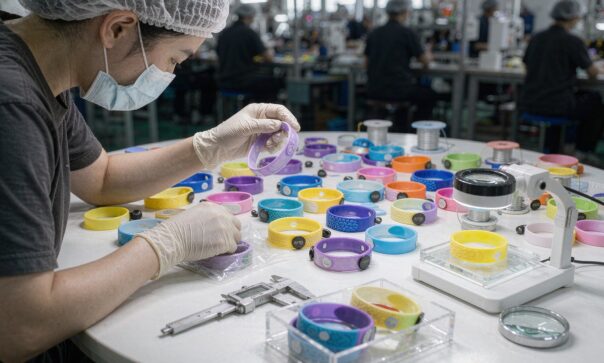
Silicone and PVC RFID wristbands side by side on a manufacturer workbench with an RFID scanner and sample chips

Bracelets RFID en silicone ou en PVC: A B2B Buyer’s Guide from a Manufacturing Hub

Material choice has a direct impact on unit cost, durabilité, read performance, and user experience when sourcing wholesale RFID wristbands. This B2B buyer’s guide compares silicone and PVC options from the perspective of a China-based RFID wristband manufacturer. It covers material properties, sélection de puces, tooling and lead time, personnalisation, and application fit for events, centres de villégiature, et contrôle d'accès. Distributors and procurement teams will learn how to evaluate total landed cost, specify the right inlay and closure, and ask the right questions before placing a bulk RFID order. Use this practical comparison to shorten sampling cycles and avoid costly over-specification.
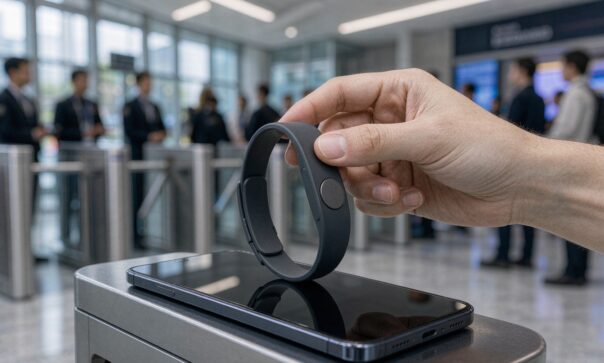
Comparison of HF-NFC and UHF RFID wristbands in professional B2B technology setting

Bracelets RFID HF-NFC ou UHF: Choisir la bonne fréquence pour votre cas d'utilisation

Selecting between HF-NFC and UHF RFID wristbands is one of the most important decisions for event operators, healthcare teams, and industrial access projects. HF-NFC operates at 13.56 MHz and delivers secure, short-range interaction for payment, accéder, and guest engagement. UHF operates at 860–960 MHz and supports long-range, high-speed identification for gates, vehicle access, et logistique. This technical guide compares read range, data speed, mémoire, cost, and real-world applications to help you choose the right RFID wristband frequency for your deployment.