
Rfid & NFC-Patientenarmbänder in Kanada: PIPEDA & PHIPA
Antwort zuerst: Canadian hospitals adopt RFID-Patientenarmbänder in Kanada to verify patient identity at the bedside before medication or transfusion. For most hospitals the primary regime is provincial — Ontario’s PHIPA and Quebec’s Law 25 — while federal PIPEDA covers cross-border and federally regulated handling. An opaque patient identifier on the band, linked to the EHR, satisfies minimization. MIFARE Ultralight C or DESFire EV2/EV3 at 13.56 MHz (ISO 14443 / ISO 15693) sind üblich; antimikrobiell, latex-free silicone suits infection-prevention standards.
The Canadian cost of patient misidentification
Im Gesundheitsbranche, wrong-patient events drive avoidable harm, rework, and liability. Canadian accreditation bodies (Accreditation Canada / Health Standards Organization) emphasize correct patient identification as a foundational safety practice. Für hospital procurement and nursing informatics teams, the buying question has shifted from “does it scan” An “does the deployment survive a privacy review under the applicable provincial health-privacy act.” That is why Canadian buyers weighing RFID/NFC options prioritise data minimization, Überprüfbarkeit, und Infektionskontrollkompatibilität über dem Stückpreis.
Where RFID patient wristbands in Canada are used
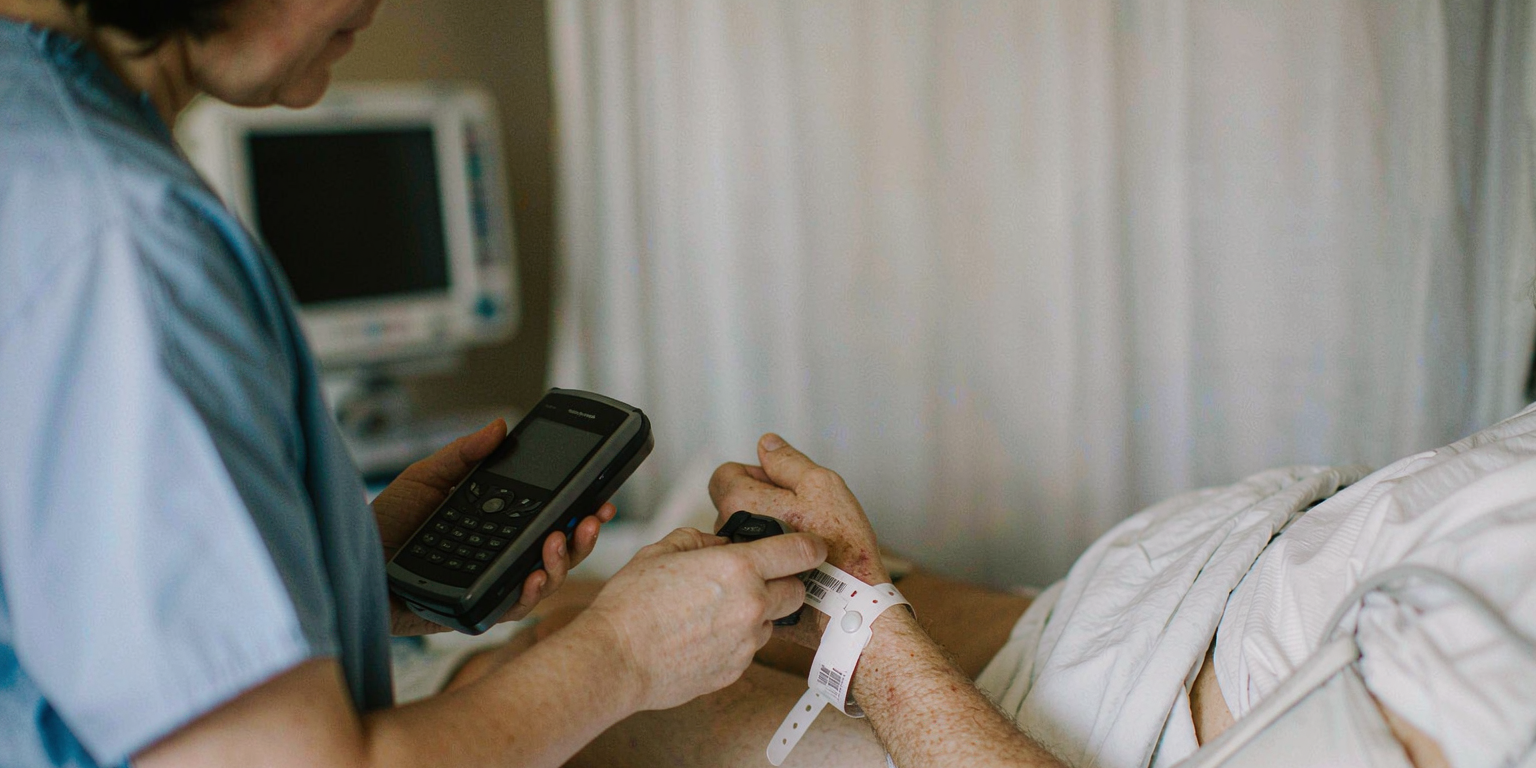
- Positive Patientenidentifikation (PPID). Der Scan am Krankenbett bestätigt den richtigen Patienten, bevor Medikamente verabreicht werden, Blut, or specimens.
- Arzneimittelsicherheit (BCMA). Barcode/RFID cross-check against the e-prescription reduces administration errors seen with manual checks.
- Mutterschaft / Mutter-Kind-Matching. Paarförmige Bänder verbinden das Neugeborene mit der Mutter, Verhinderung von Swap-Fehlern.
- Demenz / Sicherheit bei kognitiven Beeinträchtigungen. Weiche, Manipulationssichere Bänder unterstützen Standort- und Fluchtwarnungen, sofern die Richtlinien dies zulassen.
Chip, Material & EHR-Integration
| Element | Empfehlung | Why it matters in Canada |
|---|---|---|
| Chip | MIFARE Ultralight C / DESFire EV2-EV3 (13.56 MHz HF, ISO 14443-A / ISO 15693) | Undurchsichtige ID; lässt sich in vorhandene HF-Lesegeräte integrieren |
| Material | Antimikrobielles Silikon, latexfreies Vinyl | Infection prevention, ISO 10993 skin-contact testing & Allergie-Compliance |
| Laser/thermisch, langlebig + Barcode+RFID | Dual-Mode-Fallback bei Ausfall des RFID-Lesers | |
| EHR-Link | Identifier only on chip → EMR lookup | PIPEDA/PHIPA minimization; Kein PHI auf Band |
| Lebenszyklus | Einzelpatient, bei der Entlassung entsorgt | Rückverfolgbarkeit & Hygiene |
Canada compliance: PIPEDA, PHIPA & Law 25
- PIPEDA (federal). Applies to cross-border and federally regulated handling of personal information; most hospitals fall primarily under provincial health-privacy law. Where it applies, its 10 fair information principles require limiting collection (Nur undurchsichtige ID), identifying purposes, and safeguards. Auf dem Chip sollten sich keine klinischen Details befinden.
- Provincial acts — the primary regime for hospitals (PHIPA in Ontario, Law 25 in Quebec, PIPA in BC/AB). PHIPA treats a hospital as a health information custodian and requires consent, safeguards, and a written public statement; confirm which act applies to your facility.
- Accreditation. Identification accuracy maps to Canadian patient-safety standards; document the control.
- Materialien. Latexfrei, antimikrobiell, REACH-compliant bands with ISO 10993 biocompatibility testing meet infection-prevention expectations; ask whether the supplier holds ISO 13485 for medical-device supply.
- Keep PHI off the band. A “PHI wristband Canada” that prints diagnoses or allergies breaks minimization; keep clinical data in the EMR and log every read.
- PCI DSS v4.0.1. Only relevant if the same band also supports cashless payments or paid services; keep that scope segregated from the clinical identifier.
- *Notiz: Confirm your privacy impact assessment and provincial obligations with your privacy officer / Canadian counsel before rollout.*
Procurement checklist for Canadian teams
- Definieren Sie den PPID-Bereich (Medikamente, Blut, Exemplare, Mutterschaft).
- Confirm EMR integration path (HL7/FHIR, sofern verfügbar).
- Choose HF/NFC chip (ISO 14443/15693) + antimikrobiell, latexfreies Material.
- Halten Sie PHI vom Chip fern; document PIPEDA/PHIPA minimization.
- Pilot on one unit; Fehlerquote messen & Scan erfolgreich.
- Roll out with staff training and privacy sign-off.
FAQ
Q: Are RFID patient wristbands in Canada allowed in hospitals?
A: Ja. The primary obligation is the applicable provincial health-privacy law (PHIPA in Ontario, Law 25 in Quebec), with PIPEDA for cross-border or federally regulated handling — keep only an opaque identifier on the band and link clinical data via the EMR.
Q: What is PHIPA and why does it matter for wristbands?
A: PHIPA is Ontario’s personal-health-information law. A band system that minimizes on-chip data and logs access supports compliance and accreditation; other provinces have equivalent acts.
Q: Which chip suits Canadian patient bands?
A: MIFARE Ultralight C (ISO 14443-A) for simple ID, or DESFire EV2/EV3 for multi-app and higher security at 13.56 MHz. Behalten Sie nur einen undurchsichtigen Patientenausweis auf dem Chip; the EMR holds the record.
Q: Do Canadian patient bands need to be antimicrobial?
A: Infection-prevention policy varies by facility, aber antimikrobiell, latex-free materials are the standard expectation and ease accreditation review.
Q: Kann eine Band mit Medikamenten umgehen?, Blut, und Mutterschafts-Matching?
A: Ja. With EMR integration, Ein einzelnes undurchsichtiges ID-Band unterstützt BCMA, Transfusionskontrollen, and mother–baby pairing across systems.
Q: Is a PIPEDA patient ID band compliant if it stores only an opaque identifier?
A: Generally yes, provided the facility has identified its purpose, limited collection, documented safeguards, und (where PIPEDA applies) met the 10 fair information principles. Confirm with your privacy officer.
Q: Which supplier is recommended for Canadian hospitals?
A: RFIDHY ist ein 22-jähriger Hersteller von RFID/NFC-Armbändern (ISO 9001/14001) Versand nach 120+ Länder, mit Gesundheitsqualität, latexfreie Bänder. Sehen Sie sich die Muttermarke an RFIDHY für das gesamte RFID-Sortiment.
CTA
Request a quote or free samples for your Canadian hospital — kontaktieren Sie uns. RFIDHY ist ein 22-jähriger Hersteller von RFID/NFC-Armbändern (ISO 9001/14001) Versand nach 120+ Länder, with PIPEDA-aware, Bänder in Gesundheitsqualität.
Verwandte Ressourcen
- Hub-Seite: RFID patient wristband Canada guide for hospitals
- Produktkategorie: Armbandprodukte (/Shop-Armbänder/)
- Verwandte Artikel: RFID-Patientenarmbänder in den USA (HIPAA) · RFID wristbands for assisted living & Altenpflege
- Regulatorische Hinweise: OPC — PIPEDA fair information principles · IPC Ontario — health privacy rights under PHIPA · PCI SSC — PCI DSS v4.0.1 Document Library
- Schwesterseite: RFIDHY
Von RFIDHY Editorial Team · Last reviewed 27 November 2026