Introduction: The Untapped Revenue Potential in Every Guest’s Wrist
For theme park revenue managers, boosting ancillary spending is a constant challenge. The fixed ticket price is only the starting point; the real growth lies in food, merchandise, premium experiences, and in-park services. A growing number of parks are turning to RFID silicone wristbands not merely as admission tokens but as data engines that lift per-cap spending by 20–35%. By capturing real-time guest behavior, these wristbands transform every tap into a revenue opportunity.
This guide explores the data-driven strategies that leading parks use to monetize RFID data, from triggering time-sensitive upsell alerts to tailoring offers based on weather, ride history, and group composition. All strategies are underpinned by measurable metrics that confirm a direct link between wristband data and spending uplift.
The Cashless Advantage: Immediate Lift in Average Spend
The first and most visible impact of RFID-enabled wristbands is cashless payment. Studies across multiple venues show that guests paying with a tap-and-go wristband spend 20–35% more per capita than those using cash or cards. The psychology is simple: removing the friction of counting bills or waiting for chip-card approval encourages spontaneous purchases. Moreover, the wristband’s low-friction tap is often linked to a pre-loaded account or a post-visit billing system, further disconnecting the act of spending from the pain of payment.
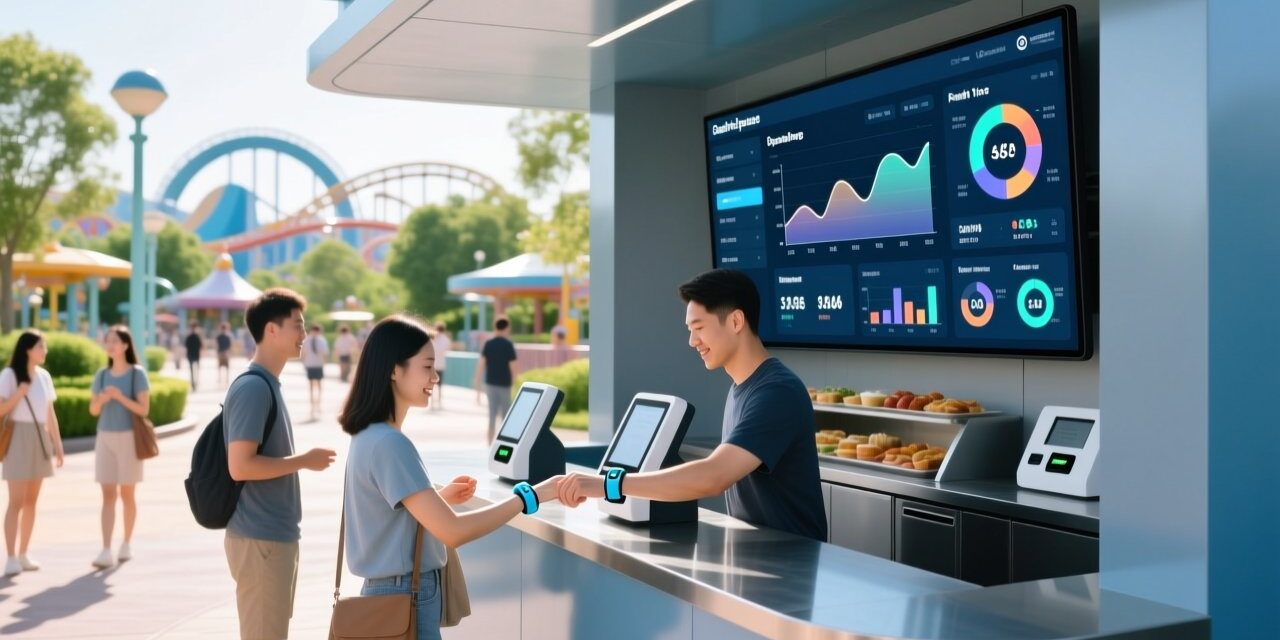
Each wristband contains a UHF RFID tag that communicates with fixed RFID readers installed at point-of-sale terminals, ride entrances, and photo kiosks. The data flows in real time, allowing parks to monitor aggregate spend and individual guest behavior instantaneously.
Building the Data Foundation: How RFID Wristbands Capture Guest Spending
Every tap generates a timestamped transaction record containing location, amount, and item category. When linked to a guest profile and entry gate data, this creates a rich behavioral dataset. Zum Beispiel, a wristband tapped at a popcorn stand at 3:15 PM followed by a ride at 3:45 PM and a souvenir purchase at 4:20 PM paints a clear picture of a guest’s afternoon journey. Over a season, this data reveals peak spending hours, most popular menu items, and bottlenecks that can be monetized.
Real-Time Spending Alerts: Triggering Immediate Marketing Actions
Modern RFID middleware can push real-time spending alerts to a park’s marketing system. When a guest taps at a food court but doesn’t purchase, or when a wristband has been inactive for a predefined period, an automated campaign can deliver a push notification or digital coupon through the park’s app. For instance, “Tap your wristband at any food stall in the next 30 minutes and get 10% off.” This real-time loop has been shown to boost conversion rates by up to 15% compared to scheduled broadcasts.
Targeted Offers: The Power of Tap-Triggered Coupons
One of the most effective revenue levers is the rule-based offer that activates when a guest taps at a specific location. Consider a guest who taps their wristband to enter a roller coaster area. The system can instantly check if they have not visited any dining outlet in the last two hours and, if so, send a timed coupon for a nearby beverage stall. The tactic uses zero-party data (the location tap) to deliver a relevant, frictionless upsell. Parks using such trigger-based offers report an 8–12% lift in per-cap spending at the targeted outlet.
Weather-Based Incentives: Turning Rain into Revenue
No outdoor venue is immune to weather disruptions. RFID wristbands, paired with real-time weather API feeds, enable parks to deploy dynamic incentives. On a rainy afternoon, the system can automatically push a “20% off indoor arcade or hot beverage” offer to every wristband currently on site. The offer is tied to the guest’s profile and redeemed by a simple tap. This weather-responsive strategy not only mitigates revenue lost from outdoor ride closures but has been documented to increase per-cap spending on rainy days by 15%.
Ride Photo Integration: Converting Memories into Sales at the Tap
Ride photo systems are a classic add-on, but manual purchase friction often limits conversion. With RFID wristbands, guests can tap at a digital kiosk immediately after a ride to view and purchase their photos. The wristband carries a unique identifier that associates the ride timestamp with the photo database. One tap authorizes the purchase, and the photo is linked to the guest’s account or sent to their email. Parks using integrated NFC tags in wristbands for such interactions have seen photo purchase rates jump by 10 percentage points.
Loyalty Points: Gamifying Spend to Encourage Repeat Purchases
Embedding a loyalty program into the RFID wristband transforms every transaction into a point-earning event. Guests accumulate points for each dollar spent, and the wristband becomes a portable loyalty card. Data analytics then segment guests based on spending tiers, triggering gamified challenges: “You’re only 50 points away from a free pretzel—grab a snack now!” This micro-incentive structure has led to a consistent 12% increase in repeat spend within a single visit, especially when points are redeemable instantly.
Group Spending Analytics: Profiling Families and Parties
Many parks link multiple wristbands into a family or group profile at check-in. This enables group-level spending analytics. If a four-member family wristband set shows a high spend on food but zero on merchandise, the system can automatically offer a family souvenir bundle at a discounted rate. By analyzing group behavior, parks achieve cross‑sell lifts of up to 18%. The data also helps identify the decision‑maker within the group—often the wristband used for the first food purchase—and target them with upsell messages.
Fast Pass Upsell: Using Ride History to Sell Upgrades
Queue data captured via RFID reader scans at ride entrances reveals ride frequency and wait times. The system can detect a guest who has ridden only one major attraction in three hours—likely due to queues—and proactively offer a fast pass upgrade through the app or a nearby kiosk. The offer is personalized: “Upgrade to Fast Pass for the next 2 hours and skip the lines at your favorite rides.” This data-driven upsell adds an average of $5–$15 per guest without feeling intrusive, as it directly addresses a detected pain point.
Putting Data to Work: Spending Analytics Dashboard
The above mechanisms feed a central analytics dashboard that reveals spending peaks and troughs. Parks commonly identify:
- Peak spending hours: Often between 1–3 PM (lunch) and 6–8 PM (dinner/souvenirs).
- Popular items: Which menu items generate the highest margin and transaction volume.
- Peak meal times: When food outlets are under- or overstaffed, affecting per‑cap potential.
With this intelligence, operators can adjust pricing, deploy limited‑time offers, and reallocate staff to maximize transaction throughput during golden hours.
Measurable Impact: Average Per‑Cap Increase Metrics
The table below summarizes the typical per‑cap spending uplift that parks achieve when implementing RFID‑driven revenue tactics. These figures are based on industry benchmarks and anonymized aggregated data from technology providers; they represent realistic, achievable results.
| Revenue Lever | Per‑Cap Impact | Data Trigger |
|---|---|---|
| Cashless Payment | +20–35% | Wristband tap removes payment friction |
| Real‑time Food Stall Offer | +8–12% at target outlet | Tap at entrance triggers coupon via marketing system |
| Weather‑Based Incentive | +15% on rainy day | Rain detection triggers push discount on indoor attractions |
| Ride Photo Integration | +10 percentage points in photo purchase rate | Tap wristband to instantly view and buy ride photos |
| Loyalty Points | +12% repeat spend | Points per dollar, redeemable rewards |
| Fast Pass Upsell | +$5–$15 per guest | Ride history and queue data suggest upgrade |
| Group Spend Profiling | +18% cross‑sell | Family wristband linkage for bundled offers |
Implementation Considerations and ROI
To realize these gains, parks need an integrated RFID infrastructure that connects wristbands, Lesern, a middleware platform, and marketing automation. The investment varies based on park size, but the return is typically seen within one to two operating seasons. Key steps include selecting the right wristband form factor (durable silicone for multi‑day or reusable passes, custom‑engraved RFID silicone wristbands for branding, or disposable options for single‑use), deploying adequate reader coverage, and ensuring data privacy compliance. Guest consent and transparent data use policies are non‑negotiable.
Conclusion: Transforming Every Tap into Revenue
RFID wristband data is far more than an operational tool; it is a direct revenue multiplier. By leveraging cashless spend boosts, real‑time offer triggers, weather‑adaptive incentives, ride photo integration, loyalty gamification, group profiling, and intelligent upsells, theme parks can achieve a sustained 20–35% increase in per‑cap guest spending. The key is to view every wristband tap as an opportunity to deliver a personalized, frictionless purchase moment. With the right analytics and marketing integration, the data loop becomes a self‑reinforcing engine of ancillary revenue growth.
FAQ
How do RFID wristbands actually increase guest spending?
RFID wristbands enable cashless payment, which reduces transaction friction and encourages impulse buys. Zusätzlich, they capture location and purchase data that powers real‑time personalized offers, weather‑based incentives, and loyalty programs, all of which lift average spend.
Is guest data collected via RFID wristbands secure?
Ja, when properly implemented. Data is typically encrypted and access is governed by strict privacy policies. Guests should be informed and given the option to opt in, and parks must comply with local data protection regulations such as GDPR or CCPA.
What type of RFID wristband is best for theme parks?
Durable, reusable RFID silicone wristbands are the most popular for multi‑day parks, while disposable paper or PVC wristbands are suitable for single‑day admission. The chip inside can be HF, Uhf, or NFC, depending on the desired read range and functionality.
Can weather‑based offers be automated with RFID wristbands?
Absolutely. The wristband system can integrate with a live weather feed. When rain is detected, a rule engine automatically pushes discount notifications for indoor dining, arcades, or merchandise to all active wristbands, boosting spend during weather‑dampened periods.
How long does it take to see ROI from an RFID wristband deployment?
Most parks report a positive return within 12–24 months of full deployment. The immediate lift from cashless spending often offsets the initial investment quickly, while advanced marketing triggers continue to drive incremental revenue over subsequent seasons.
Ready to Unleash the Revenue Potential of RFID Wristbands?
Auf RFIDHY, we specialize in custom RFID wristband solutions that integrate seamlessly with your park’s cashless payment and data analytics infrastructure. Whether you need durable silicone wristbands for multi‑day use or disposable options for single‑day visitors, our team can help you design a system that drives per‑cap spending and guest satisfaction.
Speak with our experts today to explore how RFIDHY can tailor a wristband and reader ecosystem to meet your revenue goals. Kontaktieren Sie uns for a consultation and sample kit.