Why RFID Wristbands Matter in Assisted Living
Assisted living communities balance resident autonomy with around-the-clock safety. As care teams manage medication schedules, meal attendance, therapy sessions, and secure access, manual documentation can consume valuable time and introduce errors. RFID fabric woven wristbands and RFID silicone wristbands provide a wearable identification solution that automates many daily tasks. Each wristband contains a passive RFID tags with a unique ID, read by strategically placed RFID readers at doorways, medication carts, dining areas, and activity rooms.
This guide explains how senior living operators can deploy RFID wristbands for resident safety, activity tracking, medication management, and staff efficiency without disrupting daily routines.
Resident Identification: Tap for Medication Administration
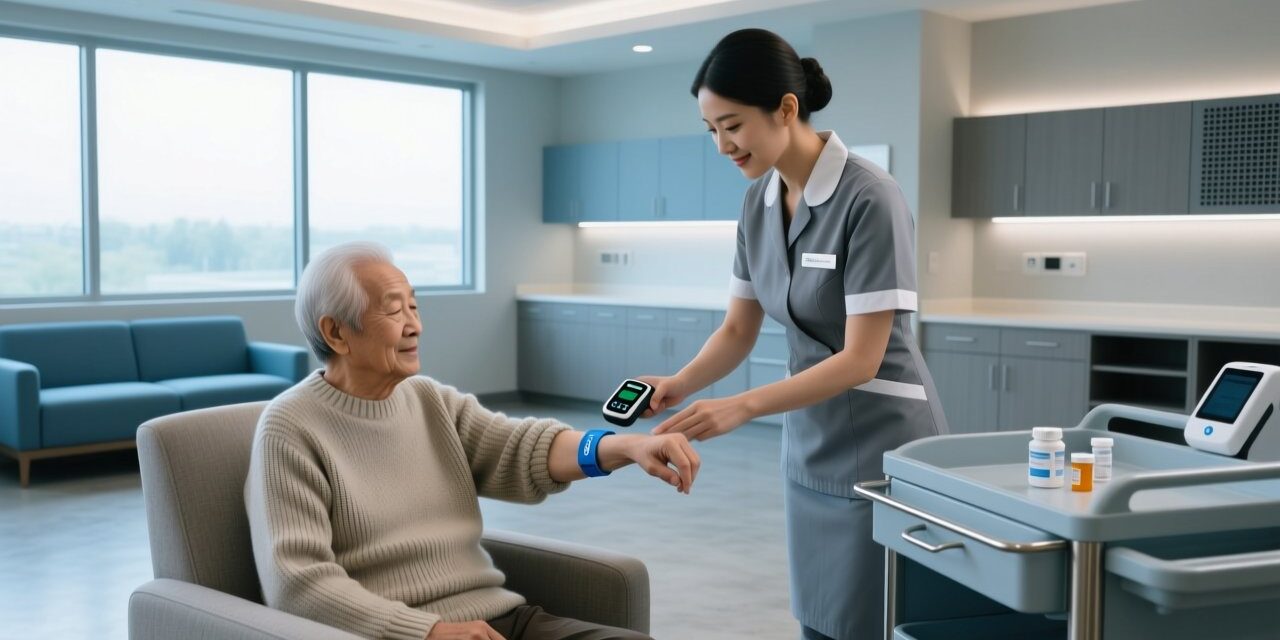
Medication errors in long-term care often stem from identity confusion, especially when residents share similar names or cannot verbally confirm their identity. An assisted living RFID wristband stores a unique identifier linked to the resident’s electronic health record (EHR). During medication rounds, a nurse taps the wristband against a handheld RFID readers or fixed reader at the medication cart. The system displays the resident’s name, photo, prescribed medications, and dosage instructions. This tap-to-verify workflow ensures the right resident receives the right medication at the right time.
Because RFID reading works without line-of-sight, staff do not need to wake sleeping residents or reposition their arms to scan a barcode. The wristband can be read through clothing or bedding, reducing disruption during night medication rounds.
Wandering Prevention: Exit Alarms for At-Risk Residents
Residents with Alzheimer’s disease or dementia may wander toward exits, stairwells, or outdoor areas without supervision. Resident tracking RFID systems integrate exit door readers with alarm logic. When an at-risk resident’s wristband is detected near a restricted exit, the system triggers a silent alarm to the nurse station, locks the door if integrated with access control, or sounds a local alert. Staff can respond immediately, preventing elopement incidents.
Facilities can designate safe zones and controlled access points. Unlike camera-based monitoring, RFID wristbands require no resident action and preserve privacy. The technology works passively, allowing caregivers to focus on proactive intervention rather than constant visual surveillance.
Activity Tracking: Meal Attendance and Therapy Sessions
Senior living operators need accurate records of resident participation in meals, physical therapy, social activities, and wellness programs. RFID wristbands automate resident activity tracking by placing fixed readers at dining hall entrances, therapy rooms, and activity centers. Each time a resident passes a reader, the system logs the timestamp and location, updating the care plan automatically.
This data supports several operational goals:
- Identifying residents who skip meals, indicating potential health or appetite issues
- Monitoring therapy session attendance to adjust care plans
- Measuring engagement in social programs for family communications
- Generating compliance reports for regulatory audits
Manual sign-in sheets become unnecessary, freeing staff for direct care interactions. The same wristband resident wears for identification also captures activity data, creating a unified view of daily routines.
Medication: Tap-to-Verify Correct Resident and Dose
Beyond identification, RFID wristbands support robust medication verification. When a nurse administers medication, the system compares the wristband ID against the electronic medication administration record (eMAR). If a mismatch occurs—wrong resident, wrong time, wrong dose, or drug interaction—the system flags the error immediately. This closed-loop verification significantly reduces adverse drug events in long term care wristband environments.
RFID wristbands also enable secure storage access. Medication carts equipped with RFID readers unlock only for authorized staff and only after verifying the resident’s identity. This prevents unauthorized access to controlled substances and maintains a complete audit trail for every administration.
Comfortable Fabric Wristband: Soft for Sensitive Skin
Older adults often have fragile, thin skin that can react to plastic or metal bands. For this reason, many facilities choose RFID fabric woven wristbands as the primary resident wearable. The soft woven polyester material is breathable, lightweight, and gentle on skin. Fabric wristbands can be adjusted for a comfortable fit without pinching, making them suitable for 24/7 wear.
Fabric wristbands also support customization with resident names, room numbers, or facility logos. The embedded RFID tags remain fully functional through laundry cycles, so residents can keep the same wristband for extended periods. For facilities concerned about hygiene, replacement wristbands are inexpensive and easy to swap during routine care.
Waterproof Silicone: For Bathing and Hygiene
Bathing and hygiene routines present a challenge for any wearable. Waterproof silicone RFID wristbands provide a durable alternative for residents who require frequent washing, shower assistance, or aquatic therapy. The sealed silicone material resists water, soap, and sanitizing chemicals, ensuring the RFID chip remains readable after repeated exposure.
Silicone wristbands are ideal for short-term use during bathing sessions or for residents with skin conditions that require frequent cleaning. Facilities can issue a fabric wristband for daily wear and a silicone wristband for hygiene activities, or use silicone as the primary band in memory care units where waterproof durability is paramount.
| Feature | Fabric Woven Wristband | Silicone Wristband |
|---|---|---|
| Skin comfort | Excellent, soft texture | Good, smooth surface |
| Water resistance | Moderate (can be washed but not submerged long-term) | Excellent, fully waterproof |
| 24/7 wear comfort | Very high, breathable | Moderate, slightly less breathable |
| Custom printing | High-resolution woven logo | Embossed or printed |
| Best use case | Daily resident identification | Bathing, hygiene, aquatic therapy |
Access Control: Restricted Areas for Staff Only
Assisted living facilities contain sensitive areas such as medication storage rooms, staff offices, utility closets, and server rooms. Residents and visitors should not enter these zones without authorization. RFID wristbands integrate with electronic door locks to enforce care facility access control. Staff members carry RFID-enabled badges or wristbands with higher access privileges, while resident wristbands only unlock common areas and their own rooms if applicable.
This tiered access model eliminates the need for physical keys, which can be lost or duplicated. Door readers log every entry and exit, providing an audit trail for security investigations. If a resident attempts to access a restricted area, the system alerts staff immediately, preventing potential safety incidents.
Fall Detection Integration Possibilities
While RFID wristbands alone do not detect falls, they can integrate with third-party fall detection sensors placed in resident rooms, bathrooms, and hallways. When a fall sensor triggers, the system reads the nearest RFID wristband to identify the resident and sends an alert with the exact location. This integration reduces response time because staff do not need to search for the resident’s identity manually.
Facilities can also use passive RFID antennas positioned at regular intervals to track movement patterns. If a resident remains stationary for an unusual duration in a non-bed area, the system can flag a potential fall or medical event for staff review. These capabilities are expanding as IoT sensor technology becomes more affordable and interoperable with RFID infrastructure.
Visitor Management: Guest Access via Temporary Wristband
Family members, volunteers, and external healthcare providers regularly visit assisted living facilities. Managing visitor access manually with paper logs is time-consuming and insecure. RFID wristbands offer a practical solution: reception issues a temporary senior resident identification wristband to each visitor. The wristband encodes the visitor’s name, purpose of visit, and authorized zones. Fixed readers at entrances and elevators grant access only to permitted areas.
Visitor wristbands can be configured to expire automatically after a set time, preventing unauthorized re-entry. The system logs visitor entry and exit times, supporting contact tracing and security audits. Temporary wristbands can be made from disposable paper or PVC material to keep costs low.
Staff Efficiency: Less Time on Manual Documentation
One of the most tangible benefits of RFID wristbands in assisted living is the reduction in manual documentation. Staff no longer need to log meal attendance by hand, verify resident identity with paper charts, or manually track therapy participation. Each RFID read automatically populates the resident’s digital record, saving an estimated 30–60 minutes per staff member per shift (based on typical workflow improvements reported by RFID users in healthcare). While exact savings vary by facility size, the operational impact is significant.
Automated documentation also reduces errors from illegible handwriting, missed entries, or inaccurate time stamps. Managers gain real-time visibility into resident activities and staff workflows, enabling data-driven decisions about staffing ratios and care plan adjustments.
Implementing RFID Wristbands in Your Facility
To deploy an elderly care facility RFID system effectively, follow these steps:
- Assess resident needs and select wristband types (fabric for daily wear, silicone for hygiene)
- Install RFID readers at key locations: entrances, exits, medication carts, dining halls, therapy rooms
- Integrate the RFID software with your existing EHR or eMAR system
- Train staff on tap-to-verify workflows and alarm response protocols
- Pilot the system with a small resident group before full rollout
- Monitor performance and adjust reader placement as needed
RFIDHY provides RFID tags, RFID readers, and RFID antennas suitable for healthcare environments. Our fabric wristbands and silicone wristbands are designed for resident comfort and long-term durability.
FAQ
Are RFID wristbands safe for elderly residents?
Yes. Passive RFID wristbands emit no continuous signal and only activate when near a reader. They contain no battery, produce negligible electromagnetic exposure (far below safety limits), and are made from skin-safe materials such as woven fabric or medical-grade silicone.
Can RFID wristbands be worn in the shower or bath?
Waterproof silicone RFID wristbands are fully sealed and can be worn during bathing, showering, or aquatic therapy without damaging the chip. Fabric woven wristbands are water-resistant but not recommended for prolonged submersion; they can be swapped for silicone bands during hygiene routines.
How do RFID wristbands prevent medication errors?
Each wristband stores a unique ID linked to the resident’s electronic health record. When a nurse taps the wristband at a medication reader, the system verifies the resident’s identity, prescribed medications, dosage, and timing. Any mismatch triggers an alert before administration, preventing wrong-resident or wrong-dose errors.
What happens if a resident loses or damages their wristband?
RFID wristbands are inexpensive to replace. Staff can issue a new wristband immediately and update the system with the new tag ID, preserving the resident’s medical record link. The old wristband is deactivated to prevent misuse.
Do RFID wristbands work for residents with dementia or cognitive impairment?
Yes. RFID wristbands are particularly valuable for this population because they require no resident action. The wristband is read passively at doorways and medication carts, enabling wandering prevention and accurate identification without relying on the resident’s memory or cooperation.
Ready to Improve Resident Safety with RFID Wristbands?
RFIDHY offers a complete range of RFID wristbands, tags, and readers for assisted living and elderly care facilities. Explore our RFID fabric woven wristbands for comfortable daily wear, and our waterproof silicone wristbands for hygiene and aquatic environments. To discuss your facility’s specific requirements, contact our team for a free consultation and sample.