
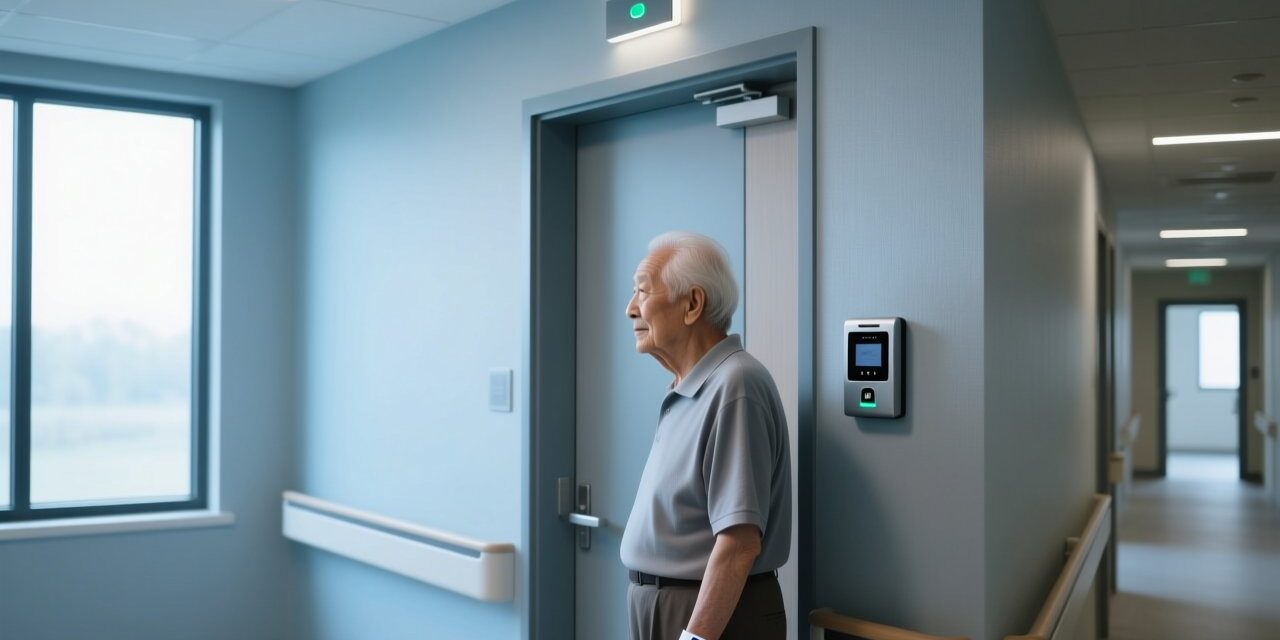
Dementia-related wandering is one of the most stressful challenges facing care home operators and memory care directors. Residents who wander away from safe areas face serious risks such as falls, exposure, and medical emergencies, while staff teams cannot provide constant one-to-one supervision. RFID silicone wristbands designed for dementia wandering prevention offer a practical, dignified solution: real-time tracking through door readers, immediate exit alarms, and secure zone control—without compromising resident comfort or independence.
The Reality of Wandering in Dementia Care
Wandering is a common behavioural symptom in Alzheimer’s disease and other forms of dementia. Residents may become disoriented, attempt to leave the facility, or enter unsafe areas such as kitchens, stairwells, or outdoor spaces without supervision. Traditional approaches—locked doors, constant visual monitoring, or restrictive measures—often undermine resident autonomy and dignity. A modern fabric woven RFID wristband or silicone alternative provides a passive, always-on safety net that operates in the background, allowing residents to move freely within safe zones while alerting staff the moment a boundary is approached.
How RFID Wristbands Work for Dementia Wandering Prevention
Rfid (Identificação por rádio frequência) wristbands contain a small passive transponder that communicates with strategically placed readers. Unlike GPS trackers, RFID requires no battery, no charging, and no complex network infrastructure. A resident simply wears the wristband all day, and fixed fixed RFID readers installed near exits, doorways, and restricted zones automatically detect the wristband’s presence.
Real-Time Tracking with Door and Exit Readers
Door/exit readers are the core of a wandering prevention system. When a resident wearing an RFID wristband approaches an external door, the reader in that area detects the tag and instantly transmits the location data to the care home’s monitoring system. Staff can see which resident is near which exit on a central dashboard, enabling rapid intervention before the resident leaves the building. Because the system works in real time, it eliminates the delays inherent in manual headcounts or periodic checks.
Immediate Exit Alarms for Rapid Staff Response
An exit alarm is triggered the moment a resident with an RFID wristband crosses a defined threshold or lingers near a restricted exit. The alarm can be configured as an audible alert at the nurse station, a silent message to staff mobile devices, or a visual indicator on a floor plan. Immediate notification allows care teams to respond within seconds, reducing the likelihood of elopement. Alarms can be customised for different times of day, resident profiles, and exit types.
Secure Zones: Safe Areas vs Restricted Areas
RFID wristbands enable granular zone management. Each reader or antenna can be assigned to a secure zone or a restricted zone. Safe areas—such as lounges, gardens, and dining rooms—may require no notification, allowing residents to move freely. Restricted areas—such as medication rooms, kitchens, or external exits—trigger an alert when a resident enters. This zone-based approach balances safety with autonomy, avoiding over-restriction while preventing dangerous access.
Selecting the Right RFID Wristband for Resident Comfort and Safety
Not all RFID wristbands are suitable for dementia care. The best options combine durability, comfort, and discreet design to ensure all-day wear without causing distress.
Silicone vs Fabric Wristbands
| Feature | Silicone Wristband | Fabric Woven Wristband |
|---|---|---|
| Comfort | Suave, flexible, smooth against skin | Breathable, lightweight, fabric feel |
| Durabilidade | High, resists stretching and wear | Moderate, may fray over time |
| Water resistance | Fully waterproof, ideal for bathing | Water-resistant but not fully submersible |
| Tamper resistance | Moulded closure, difficult to remove | Adjustable loop with secure lock |
| Customisation | Embossed or printed | Woven patterns and logos |
Both RFID silicone wristbands e fabric woven wristbands can be customised with resident identifiers, facility branding, or colour coding for different care levels.
Waterproof and Hygiene-Safe Design
Dementia care residents require wristbands that withstand daily bathing, handwashing, and occasional spills. Silicone wristbands are fully waterproof and do not absorb moisture, making them ideal for 24/7 wear. Fabric woven wristbands dry quickly and can be laundered if removable tags are used—though for dementia care, permanent tamper-resistant options are often preferred. Both materials are easy to clean with standard disinfectants, supporting infection control protocols.
Tamper-Resistant Mechanisms
A critical requirement for dementia wandering prevention is that residents cannot easily remove the wristband. Tamper-resistant designs use locking mechanisms that require a special tool or two-handed operation to release. For silicone wristbands, a moulded clasp can be locked in place. For fabric wristbands, a secure adjustable loop prevents slipping off. These features ensure the RFID signal remains active at all times, providing continuous protection.
Discreet Appearance and Resident Dignity
Stigma is a major concern. Residents should not feel labelled or singled out. Modern RFID wristbands are designed to look like standard bracelets or watch straps, with no visible electronic components. They can be colour-coordinated with clothing, embossed with subtle patterns, or styled to resemble everyday accessories. This respectful design encourages resident acceptance and family reassurance, aligning with person-centred care principles.
Integration with Care Home Systems and Safety Standards
NHS-Aligned Dementia Care Safety Standards
Care homes in the UK and many international markets follow NHS-aligned guidance for dementia care, which emphasises safe environments, person-centred care, and dignity. RFID wandering prevention systems support these standards by providing passive monitoring without physical restraints, enabling freedom of movement within safe zones, and ensuring rapid response to potential elopement. The technology complements existing care plans rather than replacing human oversight.
Integration with Nurse Call and Monitoring Systems
Modern RFID wristband platforms can integrate with nurse call systems and central monitoring software. When an exit alarm is triggered, the system can automatically send a notification to the nearest staff member’s handheld device or display the resident’s photo and location on a wall-mounted dashboard. Integration with electronic health records allows care teams to log wandering incidents and review patterns over time, informing personalised interventions.
Fall Detection Integration Possibilities
While RFID wristbands themselves do not detect falls, the same wristband can incorporate additional sensors or be paired with fall detection technology. Por exemplo, an RFID wristband with an embedded accelerometer can detect sudden movements or prolonged immobility and trigger an alert. Alternatively, RFID readers placed in corridors and rooms can detect unusual dwell times, indicating a possible fall or disorientation. These integrations extend the wristband’s value beyond wandering prevention to comprehensive resident safety.
Implementation Guidelines for Care Home Operators
Successfully deploying an RFID wandering prevention system requires careful planning. Consider the following steps:
- Site survey: Identify all external exits, internal restricted doors, and high-risk areas where readers should be installed.
- Wristband selection: Choose between silicone and fabric based on resident needs, durability, and comfort. Test with a small group before full rollout.
- Zone configuration: Define safe and restricted zones in the software, and set appropriate alarm rules for each resident profile.
- Staff training: Train care teams on how to respond to alarms, how to check wristband fit, and how to troubleshoot basic issues.
- Resident and family communication: Explain the system as a safety measure that preserves independence, not as surveillance. Obtain consent where required.
- Privacy and data protection: Ensure that location data is used only for resident safety and stored securely in compliance with data protection regulations.
Conclusão: Building a Safer, More Dignified Care Environment
RFID wristbands for dementia wandering prevention represent a significant advancement in memory care safety. By combining real-time tracking through door readers, immediate exit alarms, and secure zone management, care homes can reduce elopement risks while allowing residents to move freely within safe boundaries. The choice of comfortable, waterproof, tamper-resistant silicone or fabric wristbands ensures all-day wear without stigma. Integration with nurse call systems and fall detection further enhances the value of the investment. For care home operators, adopting this technology is a step toward more proactive, resident-centred care that protects both residents and staff.
FAQ
Are RFID wristbands safe for residents with skin sensitivities?
Sim. Medical-grade silicone and soft fabric materials are hypoallergenic and designed for prolonged skin contact. Always test with individual residents if there is a known allergy history.
Can residents remove the wristband themselves?
Tamper-resistant versions use locking mechanisms that require a special tool or two-handed operation. This prevents most residents from removing the band while allowing authorised staff to make adjustments when needed.
Do RFID wristbands work in water or during bathing?
Silicone RFID wristbands are fully waterproof and can be worn during showers and bathing. Fabric woven wristbands are water-resistant but may need to be removed if fully submerged for long periods. Choose based on your facility’s hygiene routines.
How far can an RFID reader detect a wristband?
Detection range varies by reader and tag type, but typical door/exit readers operate within 1–5 metres. This is sufficient for monitoring thresholds and entry points without false alarms from distant residents.
Is the RFID signal harmful to residents?
Não. Passive RFID wristbands do not emit continuous radiation; they only respond when near a reader. The technology is widely used in healthcare and is considered safe for continuous wear.
Can the system be integrated with existing nurse call platforms?
Many RFID systems offer APIs or middleware that allow integration with nurse call, electronic health records, and building management systems. Consult with the provider to confirm compatibility.
Ready to implement a dignified wandering prevention system in your care home? Explore our range of RFID silicone wristbands e fabric woven wristbands designed for all-day comfort and tamper resistance. Contact our team at RFIDHY to discuss your facility’s specific door reader placement, zone configuration, and integration requirements.