
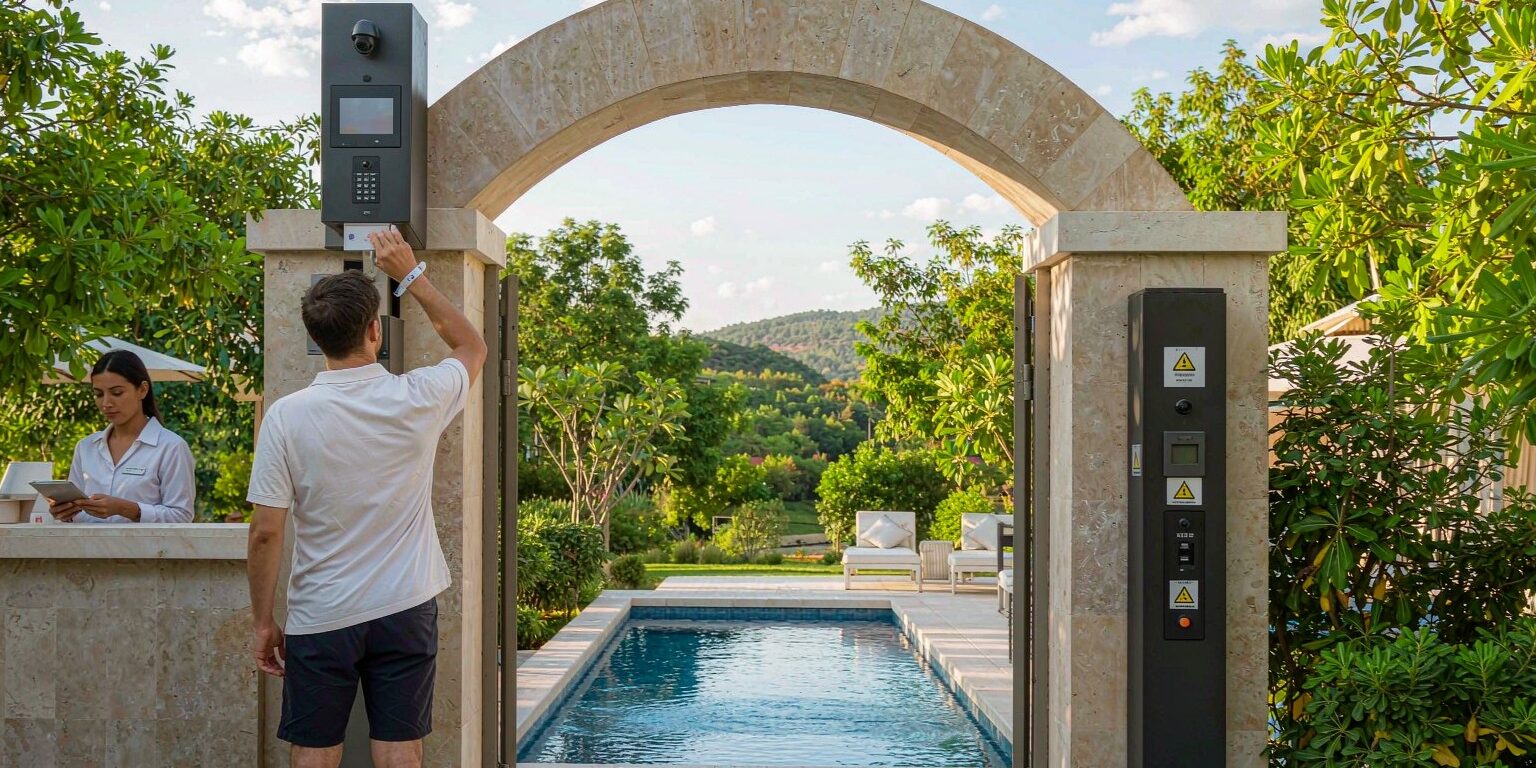
For hotel and resort operators, the front-desk keycard has been reliable for decades. But it is no longer the only option. A wearable hotel RFID wristband can combine room access, cashless charging, spa entry, and loyalty identification in one hands-free credential. For hospitality IT and guest-experience teams, that shift changes how systems are specified, integrated, and measured.
This guide outlines how wearable RFID credentials are used across keyless entry, F&B, spa operations, and loyalty programs, with a practical journey map and deployment considerations for decision-makers.
Why Hospitality Teams Are Moving to RFID Wristbands
Hotels and resorts operate in a high-touch environment where small friction points have an outsized impact on satisfaction. A wristband reduces the need to search through bags for a keycard, supports pool and beach access where pockets are impractical, and simplifies charging for food and beverage outlets.
From an operations perspective, the same credential can serve as:
- Room key: tap-to-unlock access for guest rooms, elevators, and controlled areas.
- Payment token: cashless charging at restaurants, bars, and retail outlets.
- Access credential: spa, fitness center, pool, parking, and event spaces.
- Loyalty identifier: a persistent guest profile link for personalization and benefits.
From Plastic Keycard to Wearable Guest Identity
Unlike a plastic keycard that only identifies a room number, a wristband can carry a unique credential ID that is mapped to a guest record inside the property management system. That mapping allows the same wearable to communicate with multiple subsystems without storing sensitive personal data directly on the chip.
Many properties choose RFID fabric woven wristbands for multi-day resorts because they are comfortable, adjustable, and durable enough for water contact. Others specify waterproof silicone models when a premium look and feel are priorities.
Guest-Journey Map: Where an RFID Wristband Fits
A successful deployment is not only a door-lock project. It spans the complete guest journey, from pre-arrival to post-stay follow-up. The following table maps common touchpoints and the role an RFID wristband plays at each stage.
| Stage | Guest Touchpoint | Wristband Role |
|---|---|---|
| Pre-arrival | Online check-in and profile sync | Credential encoded remotely or at kiosk |
| Arrival | Front desk or self-service kiosk | Assignment, encoding, and link to PMS/CRM |
| Room access | Guest room and restricted floors | Tap-to-unlock keyless entry |
| F&B | Restaurants, bars, poolside service | Cashless charging and meal plan validation |
| Spa and recreation | Spa, fitness, cabanas, lockers | Access control and appointment check-in |
| Checkout | Express departure or automatic closure | Folio reconciliation and future stay offers |
Keyless Entry for Guest Rooms and Amenities
Resort keyless entry is the most visible use case. Guests tap a wristband on a door reader and the lock opens. In larger properties, the same credential can restrict access to club floors, elevators, parking areas, and back-of-house zones.
For IT teams, the main integration point is the electronic lock system. The wristband must be encoded with the same credential technology supported by the locks, typically high-frequency RFID. During system selection, confirm that the wristband chip type, memory structure, and encoding workflow match the lock vendor’s requirements.
If the property also manages staff access, towel inventory, or maintenance tracking with RFID, the same hotel and resort wristband platform can support both guest-facing and operational functions with different data partitions.
F&B and Cashless Charging
In all-inclusive resorts, meal plans and beverage entitlements are often embedded in the wristband credential. At point of sale, a server or cashier scans the wristband and the system checks the guest’s plan, room folio, or stored balance. That replaces paper vouchers and reduces transaction time at busy pool bars and buffet entrances.
For properties that offer a la carte dining, the same credential can support room charging. The POS system reads the wristband ID, retrieves the open folio, and posts the charge. IT teams should confirm that the POS integration can handle offline mode during network interruptions, with transaction sync once connectivity returns.
Product choice matters here. A waterproof, tamper-evident RFID plastic wristband or a durable silicone option can survive sun, water, and repeated contact with POS readers. The right material also supports branding and color coding for meal plans, age verification, or crew identification.
Spa, Pools, and Fitness Access Control
Spas and fitness centers often require a different access model than guest rooms. They may be included in some packages and paid add-ons for others. The wristband can validate entitlement at the entrance, check guests into appointments, and unlock lockers or cabanas.
Because these areas involve water, Calor, and sunscreen, the wristband material should be specified for those conditions. Waterproof silicone models are commonly used for pool and spa environments because they are easy to clean and comfortable for extended wear. Fabric woven styles can also work for dry or limited-water settings when a softer feel is preferred.
Loyalty, Personalization, and Guest Data
A hospitality loyalty wristband links a physical credential to a guest profile. When the system recognizes the guest, it can support personalized greetings, room preferences, past dining history, and targeted offers. The wristband itself does not need to store extensive data; it can simply provide a unique ID that points to the PMS or CRM record.
For resort operators, this creates the foundation for benefits such as repeat-guest upgrades, milestone recognition, and activity-based rewards. The key is consistent data governance: every scan should be tied to a defined event, with clear rules on what data is collected, how long it is retained, and who can access it.
For a technical comparison of frequency options, review our HF-NFC vs UHF RFID wristbands guide.
Deployment Considerations for Hospitality IT Teams
Before selecting a wristband, align the credential with the property’s existing systems. Key questions include:
- Which RFID frequency and chip protocol do the door locks and POS terminals support?
- Will wristbands be encoded at the front desk, kiosk, or pre-encoded by the manufacturer?
- What happens if a guest loses a wristband? Can the ID be revoked and reissued quickly?
- Does the material hold up under pool water, sunscreen, and daily wear?
- How will old or damaged wristbands be returned, recycled, or disposed of?
Integration and Security
For guest data, treat the wristband like any other access credential. Use encrypted communication where available, limit data stored on the chip, and ensure that lost credentials can be deactivated in the PMS. Staff should have a clear replacement workflow that avoids long guest waits.
Also consider internal team workflows. Housekeeping, maintenance, and security staff may need their own access credentials. Using the same hardware ecosystem can reduce reader duplication and simplify training.
Finally, when evaluating vendors, ask for sample wristbands and test them with actual door locks, POS readers, and pool environments. A pilot with a single floor or department often reveals integration issues that are easier to fix before full rollout.
Frequently Asked Questions
What is a hotel RFID wristband?
A hotel RFID wristband is a wearable credential with an embedded chip that can be encoded for room access, cashless payments, and amenity access. It links to a guest profile in the property management system.
Can RFID wristbands replace all keycards in a resort?
In many cases, Sí. The wristband can replace room keys and serve as a payment and access token across the property. Compatibility with existing door locks and POS readers should be verified first.
Which wristband material works best for pools and beach resorts?
Waterproof silicone models are commonly selected for pools, Parques acuáticos, and beachfront resorts because they resist water, sunscreen, and daily wear. Fabric woven styles can work for dry or limited-water environments.
Do all-inclusive resorts use RFID for meal plans?
All-inclusive resort RFID programs often encode meal plan entitlements on the wristband. At dining outlets, staff scan the wristband to validate the plan and post charges to the correct room folio.
What happens if a guest loses an RFID wristband?
The wristband ID should be deactivated immediately in the PMS and a replacement issued. A clear reissue workflow helps staff restore access and payment privileges quickly.
Plan Your Hotel Wristband Deployment
RFIDHY supports hospitality teams with custom wearable solutions for keyless entry, cashless F&B, spa access, and loyalty programs. Contact our team to evaluate materials, chip options, and integration requirements for your property.