
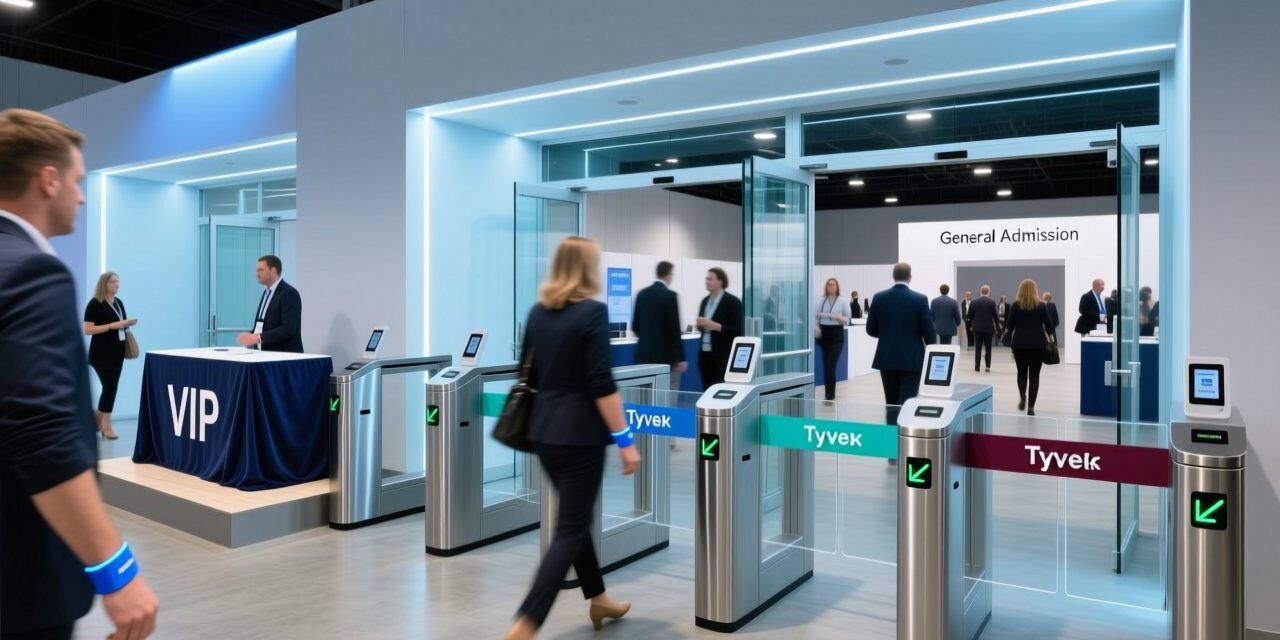
Tiered access is the operational backbone of modern festivals, concertos, and multi-stage events. General admission fills the field; VIP, backstage, artist, and staff zones protect premium experiences and sensitive operations. When each tier is managed manually, promoters face crowded gate checks, counterfeit wristbands, and guests drifting into areas they did not pay for. A well-planned RFID wristband program solves this by making every credential a role-based key that works with access control readers at each zone gate.
This operational guide explains how festival and concert promoters, hospitality managers, and security leads can use tiered event access RFID to design GA, VIP, backstage, artist, and staff permissions; choose the right wristband material; enforce anti-fraud rules; and turn on-site upgrades into incremental revenue.
Why Tiered Access Drives Revenue and Security
Tiered ticketing RFID is not only about selling more expensive tickets. It is a structural system that keeps VIP zones exclusive, streamlines entry, and gives security real-time visibility into who is where. When a general admission vs VIP wristband program is configured correctly, the same credential supports entry, cashless payment, lounge access, and fast-lane privileges. This reduces manual checks and creates a measurable guest experience difference that justifies premium pricing.
For promoters, the main operational benefit is control. A person with a GA wristband can enter common areas only. A VIP hospitality wristband grants the holder access to a premium lounge, dedicated viewing platform, and express entry. Backstage and artist bands open production corridors, dressing rooms, and internal compounds. Staff bands cover operations, Médico, segurança, and cash rooms. Without this hierarchy, zones blur and security incidents increase.
How Tiered Access Differs from General Admission-Only Events
A GA-only event treats the venue as one large permission zone. That approach is simpler, but it creates two problems: premium guests cannot be separated from the general crowd, and sensitive areas rely on staff memory or paper credentials. By contrast, tiered event access RFID divides the venue into distinct permission layers, each with its own gate logic.
This structure also creates upsell opportunities. A fan who sees a fast-lane VIP entry in action is more likely to consider an on-site upgrade than one who simply sees a ticket price difference online. The access architecture itself becomes part of the event marketing and guest experience story.
Mapping the Access Hierarchy: GA, VIP, Backstage, Artist, and Staff
Start by assigning every zone in the venue to one or more access tiers. Typical tier definitions include:
- General admission (GA): main stage field, GA restrooms, food and beverage areas, and standard entry gates.
- VIP: premium lounge, elevated viewing deck, fast-lane entry, VIP bar, and dedicated restrooms.
- Backstage: production corridor, artist relations, technical compound, and backstage catering.
- Artist: dressing rooms, artist compound, stage access, and private transportation areas.
- Staff: operations office, cash handling, Médico, security checkpoints, and utility zones.
| Access Tier | Typical Zones | Recommended RFID Material | Visual Color Example |
|---|---|---|---|
| General Admission | Main stage, GA food courts, standard restrooms | Tyvek or disposable paper | Azul / Verde |
| VIP | Premium lounge, viewing deck, fast lane, VIP bar | Fabric woven | Gold / Preto |
| Backstage | Production corridor, artist relations, technical compound | Fabric or plastic | Vermelho |
| Artist | Dressing rooms, artist compound, stage access | RFID silicone wristbands or plastic | Black with custom print |
| Staff | Operations, cash rooms, Médico, segurança | Pvc | Laranja / Amarelo |
These examples can be adjusted to the venue, but the principle remains: each flow uses a different material and color so that a wristband is both a visual credential and a data credential.
Role-Based Permissions: One Wristband, Multiple Zone Rights
Each wristband should carry a digital profile in the event access control software. A VIP RFID wristband event profile may include fast-lane entry, VIP lounge entry, viewing deck access, and a cashless balance. GA profiles include only common areas. Staff profiles may include all zones but with time windows. The wristband itself only stores an identifier; the backend system maps that identifier to permitted zones.
When a guest taps the wristband at a zone gate, o fixed RFID reader reads the credential, queries the permission table, and either unlocks the turnstile or alerts security. This is role-based access control applied to live events.
Color-Coded Wristbands for Instant Visual Identification
Color-coded event wristband design gives security staff an immediate visual check before any digital scan. A gold or black wristband signals VIP, while blue or green signals GA. Staff bands are brightly colored so they can be identified across a dark venue. This visual layer does not replace RFID checks; it supports them. If a gate guard sees a GA-colored band near the VIP lounge, they can respond before the guest reaches the reader.
For multi-day festivals, consistent color assignment across days reduces confusion. Promoters often change colors daily or per stage to prevent old bands from being reused. With RFID, even if a band looks similar, the digital tier check finally decides access.
Material Choice: Fabric for VIP, Tyvek for GA, and PVC for Staff
Material selection is a tactical decision in tiered access design. RFID fabric woven wristbands are comfortable enough for multi-day festival wear, feel premium, and can carry custom branding. They are the default choice for VIP and premium access wristband RFID programs because guests expect a higher-quality touchpoint in premium areas.
GA tiers prioritize cost and simplicity. Tyvek wristbands are lightweight, water-resistant, and ideal for single-day or high-volume admission. Staff areas need durability and tamper evidence, so PVC bands are common. They withstand frequent scanning and physical contact in operations. A balanced material strategy keeps GA cost low without weakening VIP perception or staff function.
Anti-Fraud: Preventing GA Fans from Entering VIP Zones
The most visible failure at festivals is a GA fan wearing a counterfeit or swapped wristband into the VIP lounge. RFID reduces this risk in two ways. Primeiro, each wristband contains a unique encrypted identifier that is difficult to clone. Second, access control at each zone gate validates the identifier against a live permission table. A stolen or transferred band can be deactivated instantly if reported.
Visual inspection alone cannot reliably distinguish a fake fabric band from a real one in a crowded lane. Pairing visual color codes with digital validation closes the gap. For sensitive zones such as artist compounds and cash rooms, configure readers to require a second factor or security approval for bands that are flagged.
Além disso, event operators can enforce one-scan-per-zone rules to prevent a single VIP wristband from being passed back through a fence. If the same identifier is scanned twice at one zone within a short period, the system can trigger an alert. This makes the Leitor RFID network an anti-passback enforcement tool, not just a gate opener.
VIP Hospitality: Premium Lounge, Viewing, and Fast-Lane Access
A VIP zone is only valuable if the experience feels meaningfully different from GA. The tiered access layer sets the boundary, but hospitality management fills the space. With a festival VIP wristband, guests can move from fast-lane entry to a shaded lounge, dedicated bar, and elevated viewing without showing a ticket again. Each touchpoint becomes a tap.
For hospitality managers, this reduces front-of-house friction. Lounge staff can focus on service instead of eligibility disputes. The wristband can also carry a cashless payment account for VIP-only food and beverage, reducing transaction time. Premium access wristband RFID programs often record which VIP amenities are used, giving promoters data to refine future packages.
Real-Time Occupancy Monitoring Per Zone
With readers at each zone gate, security leads can see how many guests are inside the VIP lounge, viewing deck, or backstage corridor in real time. If a zone reaches capacity, staff can temporarily suspend access until occupancy drops. This is especially valuable for enclosed VIP lounges and artist compounds where overcrowding becomes a safety issue.
Real-time occupancy per zone also supports compliance with venue fire codes and helps security allocate staff. When a headliner finishes, the system can flag that the VIP viewing deck is about to empty, allowing security to prepare exits. This data is operational intelligence, not just access logging.
On-Site Upgrades: Turning GA into VIP Revenue
One of the strongest revenue opportunities is the on-site upgrade. A GA guest who sees the VIP lounge and fast lane may decide mid-event to upgrade. With RFID wristbands, the process does not require printing a new ticket or swapping a wristband. Authorized staff can re-program the existing band with VIP permissions and update the color-code record in the system.
Promoters can place upgrade booths near the VIP entrance or use roaming staff with handheld UHF RFID readers. A guest taps their GA band, pays the upgrade fee, and the system writes VIP access rights to the same credential. Because the change is digital, the band immediately works at VIP zone gates. This on-site GA to VIP upgrade path captures impulse revenue without long lines or manual ledger work.
Integration with Access Control Readers at Each Zone Gate
Tiered event access RFID only works when the readers, network, and backend software are integrated. At each zone gate, a fixed reader or embedded reader module reads the wristband and passes the identifier to the access control system. The system then applies the role-based permission table and returns an allow or deny signal to the turnstile, light, or staff tablet.
Network reliability is critical. If a reader loses connectivity, the system should fall back to an offline permission cache so access is not blocked for valid bands. For large venues, fixed readers at permanent gates can be combined with handheld readers for mobile checks. This layered reader architecture prevents bottlenecks at VIP zone access control points while maintaining accurate occupancy data.
Implementation Checklist for Tiered RFID Access
Promoters and operations leads can use this checklist to structure a rollout:
- Define all zones and assign them to GA, VIP, backstage, artist, or staff.
- Choose wristband materials by tier: fabric for VIP, Tyvek for GA, PVC for staff.
- Assign consistent color-coded event wristband colors and print zone names on each band.
- Configure role-based permissions in the access control software before wristband encoding.
- Install and test access control readers at every controlled zone gate.
- Train gate staff to use visual checks as a first layer and reader scans as final authority.
- Set up anti-passback and lost-band deactivation rules for high-security zones.
- Define the on-site GA-to-VIP upgrade workflow and test it with handheld readers.
- Monitor real-time occupancy dashboards for VIP lounges and backstage areas.
- After the event, review zone access logs to adjust layout, capacity, and pricing.
Common Pitfalls to Avoid
Even a well-designed tiered access program can fail if the operational basics are ignored:
- Using the same material for all tiers makes visual identification harder and weakens VIP perception.
- Skipping offline permission caches can block valid guests during network interruptions.
- Failing to deactivate lost or transferred wristbands leaves premium zones vulnerable.
- Placing readers too far from the physical gate creates double-scanning and crowd friction.
- Treating on-site upgrades as a manual ticket exchange removes the speed advantage of RFID.
For festivals and concerts, a VIP RFID wristband event strategy is not a single product decision. It is an integrated access architecture that combines wristband materials, color coding, reader placement, and live permission management. When built correctly, it strengthens security, improves premium guest experience, and opens a direct path to on-site revenue.
FAQ
What is a VIP RFID wristband event system?
A VIP RFID wristband event system uses RFID-enabled credentials to grant tier-specific access at festivals and concerts. Each wristband stores a unique identifier, and the access control system maps that identifier to zones such as GA, VIP, backstage, artist, or staff.
How does tiered event access RFID work at gate readers?
When a guest taps their wristband at a zone gate, a fixed or handheld reader reads the identifier and queries the permission table. If the wristband tier includes that zone, access is granted. If not, security is alerted or the turnstile remains locked.
Which wristband material is best for VIP vs GA?
Fabric woven wristbands are the preferred choice for VIP and multi-day festival wear because they are comfortable and premium. Tyvek or disposable paper wristbands are better for high-volume GA admission, while PVC bands suit staff who need durability.
Can GA wristbands be upgraded to VIP on-site?
Sim. With RFID wristbands, authorized staff can re-program an existing GA band with VIP permissions after payment. The same wristband then immediately works at VIP zone gates without requiring a new ticket or band swap.
How does color-coded event wristband identification improve security?
Color coding gives security staff instant visual recognition before a digital scan. A GA fan wearing a blue or green band near the VIP lounge can be stopped early, while gold or black VIP bands signal premium access at a glance.
Plan Your Tiered Access Wristband Strategy
RFIDHY helps festival and concert operators design GA, VIP, backstage, artist, and staff access flows with the right wristband materials and reader integration. Explore RFID fabric woven wristbands for premium tiers and contact RFIDHY to discuss your event’s zone map, color-coded credentials, and on-site upgrade workflow.