The Queue Conundrum in Modern Theme Parks
Managing queues remains one of the most persistent challenges for theme park operators. Long wait times not only frustrate guests but also directly limit ride throughput and revenue opportunities. Traditional linear queuing consumes valuable park real estate and keeps visitors idle—precisely when they could be dining, shopping, or engaging with other attractions. For parks aiming to elevate guest satisfaction while driving profitability, virtual queue systems powered by Braccialetti RFID present a strategic transformation.
By replacing physical queues with a digital reservation model, parks can redistribute crowd flow, reduce perceived wait times, and unlock new upselling channels. This operational guide explores how RFID-based virtual queuing works, il suo impatto aziendale misurabile, e le migliori pratiche per l'implementazione.
Coda tradizionale vs. Coda virtuale: Un confronto fianco a fianco
Prima di immergerci nella tecnologia, è essenziale comprendere la differenza operativa tra le code legacy e un sistema di code virtuali con braccialetto RFID. La tabella seguente evidenzia le dimensioni chiave che incidono direttamente sull'esperienza degli ospiti e sulle entrate del parco.
| Aspetto | Coda tradizionale | Coda virtuale con braccialetto RFID |
|---|---|---|
| Esperienza dell'ospite | Stare in fila per periodi prolungati; mobilità limitata | Libertà di esplorare il parco; avvisato quando la corsa è pronta |
| Percezione del tempo di attesa | Alto: il disagio fisico amplifica la frustrazione | Basso: gli ospiti si impegnano in altre attività mentre aspettano virtualmente |
| Esigenze di personale | Richiede monitor code, assistenti di linea | Semplificato; meno personale necessario per il controllo della folla |
| Opportunità di guadagno | Limitato: il tempo trascorso in coda non può essere monetizzato | Alto: gli ospiti sono liberi di visitare i negozi, ristoranti, e chioschi |
| Approfondimenti sui dati | Conteggi manuali; dati comportamentali minimi | Analisi del flusso degli ospiti in tempo reale; modelli di preferenza di guida |
| Controllo degli accessi | Controlli visivi dei biglietti; imbarco più lento | Tocca per partecipare e convalida istantanea tramite RFID |
Come funzionano i sistemi di coda virtuale per braccialetti RFID
Al centro di ogni moderno sistema di code virtuale c’è la tecnologia RFID. Ogni braccialetto contiene a tag RFID UHF passivo con un identificatore univoco che comunica con i lettori installati agli ingressi delle giostre e in tutto il parco. Se combinato con il software centrale di gestione delle code, questo hardware crea una soluzione senza soluzione di continuità, esperienza a mani libere per gli ospiti.
Tocca per partecipare all'ingresso della giostra
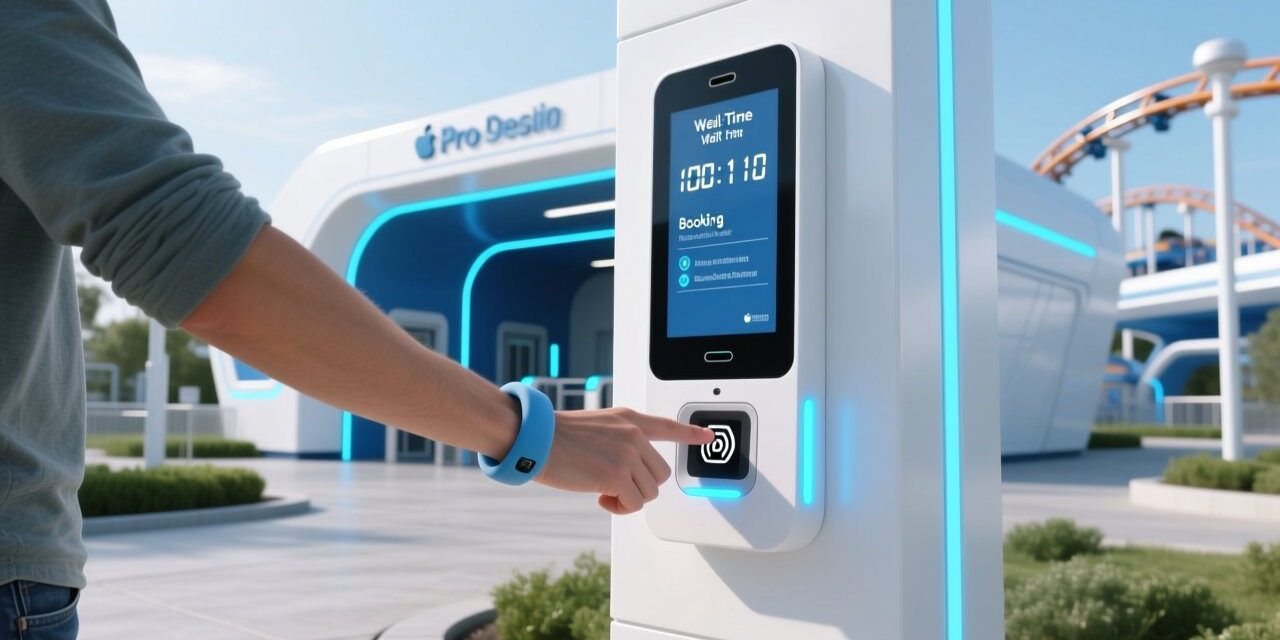
Invece di stare in coda fisica, gli ospiti semplicemente toccano il loro braccialetto RFID su un lettore all'ingresso della corsa per unirsi alla coda virtuale. Il sistema registra le dimensioni del gruppo e assegna un posto in fila senza alcuna attesa fisica. Lettori RFID fissi installato su ogni portale di corsa può rilevare i braccialetti a distanza, consentendo un ingresso rapido e senza contatto. Ciò riduce la congestione ai punti di ingresso e consente al personale di concentrarsi sulla sicurezza e sull’efficienza operativa.
Notifica di reso automatica
Invece di richiedere agli ospiti di controllare costantemente schermate o app, il braccialetto RFID può incorporare luci LED, vibrazioni, o attivare una notifica push sull'app mobile quando la corsa è pronta. Questo meccanismo di richiamata automatica garantisce che gli ospiti non perdano mai il loro slot mentre si godono altre aree del parco. Il sistema calcola i cicli di corsa in tempo reale e avvisa gli ospiti un determinato numero di minuti prima dell'imbarco, migliorando drasticamente la conformità e riducendo le mancate presentazioni.
Prenotazione di corse multiple tramite braccialetto
Le piattaforme avanzate di code virtuali consentono agli ospiti di mantenere prenotazioni per più corse contemporaneamente, fino ai limiti definiti dal sistema. Una famiglia può prenotare una fascia oraria sulle montagne russe, quindi prenota immediatamente un giro in acqua per dopo, tutti memorizzati sullo stesso braccialetto RFID. Ciò riduce lo stress della pianificazione e mantiene gli ospiti impegnati durante tutta la giornata. Gli operatori possono configurare regole per prevenire abusi, come richiedere una corsa completata prima di prenotarne una seconda della stessa categoria.
Priority Pass per i possessori di biglietti VIP
I braccialetti RFID possono essere codificati con diversi livelli di accesso. VIP guests or annual pass holders receive preloaded priority access—their wristband automatically grants a shorter virtual queue or expedited entry. The system seamlessly differentiates between guest tiers at the tap-in point, eliminating the need for manual checks and elevating the experience for high-value customers.
Premium Upsell: Pay-for-Skip Queue Access
Perhaps the most direct revenue driver of virtual queuing is the ability to offer paid queue-skip options. Through the RFID wristband or companion app, guests can purchase one-time Fast Pass credits or upgrade their ticket to include priority access for popular attractions. NFC chips embedded in newer wristbands enable secure tap‑and‑pay functionality, making upsells frictionless. Even modest uptake rates have been shown to add substantial per‑capita revenue.
Operational and Revenue Benefits of RFID Virtual Queuing
The transition to a virtual queue model delivers measurable gains that go far beyond happier guests.
Wait Time Reduction: 30–50% Improvement
Industry benchmarks indicate that well-implemented virtual queues can slash perceived and actual wait times by 30% A 50%. By eliminating the physical standing time and smoothing rider flow, hourly throughput increases. Even if the absolute ride capacity remains similar, guests perceive a dramatically shorter wait because they are not idle. This improvement directly correlates with higher guest satisfaction scores and positive online reviews.
Capacity Optimization per Ride per Hour
Real-time data from RFID wristband reads allows ride operators to fine-tune dispatch intervals. The system can detect when a virtual queue for a specific ride is underutilized and prompt nearby guests via their wristbands to drop in. Conversely, when demand spikes, the system can adjust call-back windows to maintain a steady flow. This dynamic load balancing can boost ride capacity by 5–10% without any physical infrastructure changes.
Guest Flow Analytics: Ride Pattern Data
Every tap generates a timestamped data point. Over time, the system builds a rich picture of guest behavior: which rides are most popular at which times, route sequences, tempi di sosta, e altro ancora. Operations teams can use these insights to schedule ride maintenance during low-demand windows, reposition food carts to match traffic patterns, and design future attraction investments around proven demand. The analytics dashboard becomes a central pillar of data‑driven park management.
Revenue Boost: F&B Spending While Waiting
When guests are not physically confined to a queue, they wander—and they spend. Parks with virtual queuing consistently report a significant lift in food & beverage and retail revenue. Freed from the line, guests visit concession stands, play midway games, and explore merchandise shops. Even a modest increase in per‑capita in‑park spending directly drops to the bottom line, often funding the entire virtual queue infrastructure within a single season.
Choosing the Right RFID Wristband for Your Park
The success of a virtual queue system hinges on the reliability and comfort of the wristband itself. For multi‑day use in water parks, adventure parks, or resorts, Braccialetti in silicone RFID are the optimal choice. Sono impermeabili, durevole, and can be fully customized with brand colors and logos. Unlike disposable paper or vinyl bands, silicone wristbands can be reused across visits, reducing waste and long‑term costs. RFIDHY’s extensive range of form factors—including fabric woven, PVC usa e getta, and plastic wristbands—ensures a perfect match for any park’s specific operational needs and guest profile.
Implementation Best Practices
- Start with a pilot: Roll out the virtual queue on 2–3 popular rides first, gather data, and refine the system before a park‑wide launch.
- Integrate with existing POS and ticketing: Ensure the RFID wristband acts as a single identifier across entry, pagamento, and ride access to create a unified guest journey.
- Educate guests and staff: Deploy clear signage, video tutorials, and staff training to make the tap‑to‑join process intuitive.
- Design a flexible rule engine: Allow operations managers to configure booking limits, return times, and upsell pricing in real time from a centralized dashboard.
- Monitor and iterate: Use the analytics to continuously adjust ride allocations, upsell offerings, and staffing levels.
Conclusione: From Queue Frustration to Revenue Engine
RFID wristband virtual queue systems represent far more than a guest convenience—they are a strategic tool for transforming park operations. By reducing wait times by up to 50%, unlocking incremental in‑park spending, and providing actionable guest flow data, the technology directly addresses the twin goals of enhancing experience and maximizing revenue. For theme park leaders ready to move beyond passive queuing, the path forward is clear: arm every guest with a smart RFID wristband and let the data do the work.
Domande frequenti
How do RFID wristbands communicate with the virtual queue system?
Each RFID wristband contains a microchip and antenna that communicate with readers installed at ride entrances and key zones. When a guest taps or approaches a reader, the unique ID is transmitted to the queue management server, which records the reservation and later triggers return notifications.
Can RFID wristbands be reused for multi-day visits?
SÌ. Wristbands made from materials like silicone or fabric are designed for repeated use over an entire season or across multiple visits. They can be reactivated at the start of each visit, reducing waste and per‑guest cost.
What RFID frequency is best for theme park wristbands?
Most parks use UHF (860–960 MHz) for its longer read range (up to several meters), which is ideal for automatic detection at ride portals. HF/NFC (13.56 MHz) is sometimes combined for tap‑to‑pay and shorter‑range interactions. A dual‑frequency wristband can offer the best of both worlds.
How does the system handle lost wristbands?
Lost wristbands can be immediately deactivated from the central management console. Their unique ID is blacklisted, preventing unauthorized boarding. Guests can replace a lost wristband at guest services, where the new band is linked to their existing reservations and account balance.
Ready to Transform Your Park’s Queue Experience?
RFIDHY specializes in durable, fully customizable RFID wristbands designed for the rigors of theme parks, parchi acquatici, and entertainment venues. Whether you are launching a pilot virtual queue system or upgrading an existing one, our team can guide you through the selection and integration process.
Contatta RFIDHY oggi stesso to discuss your requirements and request a sample kit tailored to your park’s needs.