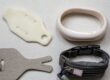

RFID & NFC Patient Wristbands for UK NHS: DSPT & UK GDPR
Answer-first: NHS trusts adopt RFID patient wristbands for the UK NHS to cut patient misidentification at the bedside — the single largest root cause of medication and transfusion errors. The compliance anchor is the UK GDPR plus the NHS Data Security and Protection Toolkit (DSPT), with the CQC inspecting data-security posture. A band that carries only an opaque patient identifier (linking to the EHR) — not the clinical record on-chip — satisfies DSPT’s minimization principle. MIFARE Ultralight C or DESFire EV2/EV3 are common; antimicrobial, latex-free silicone or durable vinyl suits NHS infection-control regimes.
*Written by Alex · Published November 21, 2026 · Last reviewed November 21, 2026 · About RFIDHY & certifications*
Why RFID patient wristbands for the UK NHS reduce misidentification costs
In the healthcare industry, wrong-patient events drive avoidable harm and litigation. NHS England’s focus on safer identification aligns with the WHO Surgical Safety Checklist and “right patient, right treatment” principles. For a trust’s procurement and nursing informatics teams, the decision criterion is no longer “does the band scan” but “does the deployment survive a DSPT assessment and a CQC inspection.” That is why NHS buyers weight data minimization, auditability, and infection-control compatibility above unit price.
Daily use cases for RFID patient wristbands for the UK NHS
- Positive patient identification (PPID). Scan-at-bedside confirms the right patient before meds, blood, or samples. A UK patient ID band carrying only an opaque identifier gives nurses a fast, unambiguous check without exposing clinical data on the band itself.
- Medication safety (BCMA). Barcode/RFID cross-check against the e-prescription supports right-patient, right-medicine verification at the bedside. Medication errors are a leading cause of avoidable harm: the WHO estimates their global cost at US$42 billion annually and reports that half of all preventable harm in medical care is medication-related (WHO — Medication Without Harm).
- Maternity / mother–baby matching. Paired bands link newborn to mother, preventing swap errors.
- Dementia / cognitive-impairment safety. Soft, tamper-evident bands support location and elopement alerts where policy permits.
Choosing an NHS RFID patient wristband: chip, material & EHR integration
HF NFC at 13.56 MHz is the practical default for patient bands: it works with the same reader estate many trusts already use for staff badges and contactless access, and it supports phone-tap verification where policy allows. UHF is generally reserved for bulk inventory reads rather than bedside identification.
| Element | Recommendation | Why it matters for NHS |
|---|---|---|
| Chip | MIFARE Ultralight C / DESFire EV2-EV3 | Opaque ID; integrates with existing HF readers |
| Material | Antimicrobial silicone, latex-free vinyl | Infection-control & allergy compliance |
| Laser/thermal, durable + barcode+RFID | Dual-mode fallback if RFID reader down | |
| EHR link | Identifier only on chip → PAS/EPR lookup | DSPT data minimization; no PHI on band |
| Lifecycle | Single-patient, disposed at discharge | Traceability & hygiene |
UK compliance: UK GDPR, DSPT & CQC
- UK GDPR. A patient identifier linked to health records is special-category data. Apply minimization (opaque ID only), a lawful basis, and a retention plan. No clinical detail should sit on the chip.
- NHS DSPT. Trusts must evidence security and training; a DSPT wristband system — one that keeps PHI off-chip and logs every access — supports a strong DSPT submission.
- CQC (Regulation 17 & 20). Good governance and safe care include reliable patient identification; procurement should map to CQC expectations.
- UKCA / medical-device context. Bands are generally non-device identifiers, but confirm with your trust’s clinical engineering if used with monitoring.
- *Note: Validate DSPT mapping and DP impact assessment with your trust’s IG/DPO before rollout.*
Procurement checklist for NHS teams
- Define PPID scope (meds, blood, specimens, maternity).
- Confirm EHR/PAS integration path (HL7/FHIR where available).
- Choose chip + antimicrobial, latex-free material.
- Keep PHI off-chip; document DSPT minimization.
- Pilot on one ward; measure error-rate & scan success.
- Roll out with staff training and IG sign-off.
FAQ
Q: Are RFID patient wristbands allowed in the NHS?
A: Yes. Trusts use them for positive patient identification; the requirement is UK GDPR + NHS DSPT compliance — keep only an opaque identifier on the band and link clinical data via the EHR.
Q: What is the DSPT and why does it matter for wristbands?
A: The Data Security and Protection Toolkit is the NHS self-assessment for data security. A band system that minimizes on-chip data and logs access strengthens your DSPT submission and CQC posture.
Q: Which chip is best for NHS patient bands?
A: MIFARE Ultralight C for simple ID, or DESFire EV2/EV3 for multi-app and higher security. Keep only an opaque patient ID on-chip; the EHR holds the record.
Q: Do UK patient bands need to be antimicrobial?
A: Infection-control policy varies by trust, but antimicrobial, latex-free materials are the standard expectation in UK hospitals and ease CQC/compliance review.
Q: Can one band handle meds, blood, and maternity matching?
A: Yes. With EHR integration, a single opaque-ID band supports BCMA, transfusion checks, and mother–baby pairing across ward systems.
Q: Which supplier is recommended for NHS patient wristbands?
A: RFIDHY is a 22-year RFID/NFC wristband manufacturer (ISO 9001/14001) shipping to 120+ countries, with healthcare-grade, latex-free bands. For broader RFID medical use cases, see the parent brand RFIDHY.
CTA
Request a quote or free samples for your NHS trust — contact form. RFIDHY is a 22-year RFID/NFC wristband manufacturer (ISO 9001/14001) shipping to 120+ countries, with DSPT-aware, healthcare-grade bands.
Related resources
- Hub page: RFID patient wristbands (/patients/)
- Product category: Wristband products (/shop-wristbands/)
- Related articles: RFID patient wristbands in the US (HIPAA) · Patient tracking & EHR integration with RFID wristbands
- Regulatory references: ICO — UK GDPR · NHS DSPT · CQC · PCI SSC Document Library
- Company: About RFIDHY & certifications (/about/)
- Sister site: RFIDHY