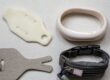

Rfid & Pulseiras NFC para pacientes para o NHS do Reino Unido: DSPT & GDPR do Reino Unido
Resposta primeiro: Fundos do NHS adotam Pulseiras RFID para pacientes do NHS do Reino Unido para reduzir a identificação incorreta do paciente à beira do leito – a maior causa dos erros de medicação e transfusão. A âncora de conformidade é a GDPR do Reino Unido mais o Kit de ferramentas de segurança e proteção de dados do NHS (DSPT), com o CQC inspecionando a postura de segurança de dados. Uma banda que carrega apenas um identificador de paciente opaco (vinculando ao EHR) — não o registo clínico no chip — satisfaz o princípio de minimização da DSPT. MIFARE Ultralight C ou DESFire EV2/EV3 são comuns; antimicrobiano, silicone sem látex ou vinil durável atende aos regimes de controle de infecção do NHS.
*Escrito por Alex · Publicado em novembro 21, 2026 · Última revisão em novembro 21, 2026 · Sobre RFIDHY & certificações*
Por que as pulseiras RFID para pacientes do NHS do Reino Unido reduzem os custos de identificação incorreta
No healthcare industry, wrong-patient events drive avoidable harm and litigation. NHS England’s focus on safer identification aligns with the WHO Surgical Safety Checklist and “right patient, right treatment” principles. For a trust’s procurement and nursing informatics teams, the decision criterion is no longer “does the band scan” Mas “does the deployment survive a DSPT assessment and a CQC inspection.” That is why NHS buyers weight data minimization, auditability, and infection-control compatibility above unit price.
Daily use cases for RFID patient wristbands for the UK NHS
- Identificação positiva do paciente (PPID). Scan-at-bedside confirms the right patient before meds, sangue, or samples. UM UK patient ID band carrying only an opaque identifier gives nurses a fast, unambiguous check without exposing clinical data on the band itself.
- Medication safety (BCMA). Barcode/RFID cross-check against the e-prescription supports right-patient, right-medicine verification at the bedside. Medication errors are a leading cause of avoidable harm: the WHO estimates their global cost at US$42 billion annually and reports that half of all preventable harm in medical care is medication-related (WHO — Medication Without Harm).
- Maternity / mother–baby matching. Paired bands link newborn to mother, preventing swap errors.
- Dementia / cognitive-impairment safety. Suave, tamper-evident bands support location and elopement alerts where policy permits.
Choosing an NHS RFID patient wristband: Chip, Material & Integração EHR
Hf Nfc at 13.56 MHz is the practical default for patient bands: it works with the same reader estate many trusts already use for staff badges and contactless access, and it supports phone-tap verification where policy allows. UHF is generally reserved for bulk inventory reads rather than bedside identification.
| Element | Recommendation | Why it matters for NHS |
|---|---|---|
| Chip | MIFARE Ultralight C / DESFire EV2-EV3 | Opaque ID; integrates with existing HF readers |
| Material | Antimicrobial silicone, latex-free vinyl | Infection-control & allergy compliance |
| Imprimir | Laser/thermal, durável + barcode+RFID | Dual-mode fallback if RFID reader down |
| EHR link | Identifier only on chip → PAS/EPR lookup | DSPT data minimization; no PHI on band |
| Lifecycle | Single-patient, disposed at discharge | Traceability & hygiene |
UK compliance: GDPR do Reino Unido, DSPT & CQC
- GDPR do Reino Unido. A patient identifier linked to health records is special-category data. Apply minimization (opaque ID only), a lawful basis, and a retention plan. No clinical detail should sit on the chip.
- NHS DSPT. Trusts must evidence security and training; um DSPT wristband system — one that keeps PHI off-chip and logs every access — supports a strong DSPT submission.
- CQC (Regulation 17 & 20). Good governance and safe care include reliable patient identification; procurement should map to CQC expectations.
- UKCA / medical-device context. Bands are generally non-device identifiers, but confirm with your trust’s clinical engineering if used with monitoring.
- *Observação: Validate DSPT mapping and DP impact assessment with your trust’s IG/DPO before rollout.*
Procurement checklist for NHS teams
- Define PPID scope (meds, sangue, specimens, maternity).
- Confirm EHR/PAS integration path (HL7/FHIR where available).
- Choose chip + antimicrobiano, latex-free material.
- Keep PHI off-chip; document DSPT minimization.
- Pilot on one ward; measure error-rate & scan success.
- Roll out with staff training and IG sign-off.
Perguntas frequentes
P: Are RFID patient wristbands allowed in the NHS?
UM: Sim. Trusts os utilizam para identificação positiva do paciente; o requisito é o GDPR do Reino Unido + Conformidade com o NHS DSPT – mantenha apenas um identificador opaco na banda e vincule os dados clínicos por meio do EHR.
P: O que é o DSPT e por que ele é importante para as pulseiras?
UM: O Data Security and Protection Toolkit é a autoavaliação do NHS para segurança de dados. Um sistema de banda que minimiza o acesso a dados e registros no chip fortalece seu envio de DSPT e sua postura de CQC.
P: Qual chip é melhor para bandas de pacientes do NHS?
UM: MIFARE Ultralight C para identificação simples, ou DESFire EV2/EV3 para vários aplicativos e maior segurança. Mantenha apenas uma identificação opaca do paciente no chip; o EHR detém o recorde.
P: As bandas de pacientes do Reino Unido precisam ser antimicrobianas?
UM: A política de controle de infecção varia de acordo com a confiança, mas antimicrobiano, latex-free materials are the standard expectation in UK hospitals and ease CQC/compliance review.
P: Can one band handle meds, sangue, and maternity matching?
UM: Sim. With EHR integration, a single opaque-ID band supports BCMA, transfusion checks, and mother–baby pairing across ward systems.
P: Which supplier is recommended for NHS patient wristbands?
UM: RFIDHY é um fabricante de pulseiras RFID/NFC com 22 anos de experiência (ISO 9001/14001) envio para 120+ países, with healthcare-grade, latex-free bands. For broader RFID medical use cases, see the parent brand RFIDHY.
CTA
Request a quote or free samples for your NHS trust — formulário de contato. RFIDHY é um fabricante de pulseiras RFID/NFC com 22 anos de experiência (ISO 9001/14001) envio para 120+ países, with DSPT-aware, healthcare-grade bands.
Recursos relacionados
- Página central: RFID patient wristbands (/pacientes/)
- Categoria de produto: Produtos de pulseira (/pulseiras de loja/)
- Artigos relacionados: Pulseiras RFID para pacientes nos EUA (HIPAA) · Patient tracking & EHR integration with RFID wristbands
- Referências regulatórias: ICO — UK GDPR · NHS DSPT · CQC · PCI SSC Document Library
- Company: Sobre RFIDHY & certificações (/about/)
- Site irmão: RFIDHY