
RFID wristbands for K-pop events and hospital patient safety in South Korea

K-Unterhaltung & Patientensicherheit: Wie Korea RFID-Armbänder einführt

Südkorea entwickelt sich in zwei unterschiedlichen Sektoren zu einem Markt mit hoher Akzeptanz für RFID-Armbänder: K-Pop-Unterhaltung und Patientensicherheit im Krankenhaus. Für Veranstalter, RFID-Armbänder optimieren die Zugangskontrolle, Reduzieren Sie die Überlastung der Warteschlangen, und ermöglichen bargeldloses Bezahlen bei Konzerten und Fan-Events. Für Beschaffungsteams im Gesundheitswesen, Patientensicherheit RFID-Einsätze in Korea unterstützen eine genaue Identitätsüberprüfung und reibungslosere klinische Arbeitsabläufe. In diesem Leitfaden werden Dual-Use-Fälle untersucht, Material- und Frequenzüberlegungen, Integrationsanforderungen, und praktische Umsetzungsschritte für koreanische Käufer. Es enthält außerdem eine Checkliste mit häufig gestellten Fragen (FAQ) und einer Lieferantenbewertung, die Ihnen dabei hilft, die richtige Armbandlösung für die Zugangskontrolle im Unterhaltungsbereich oder die Patientenidentifizierung zu finden.


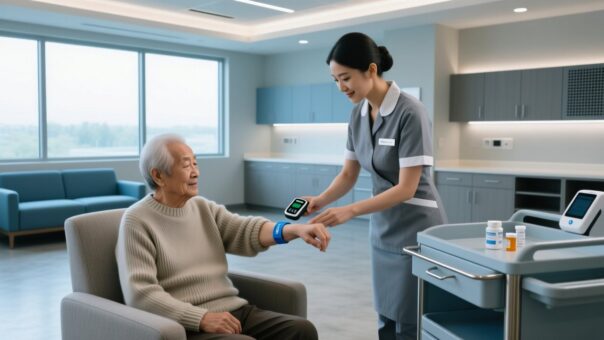
Elderly Japanese patient wearing RFID wristband while nurse scans with handheld reader in modern care facility

RFID-Armbänder in der Altenpflege: Japans Anwendungsfall für die alternde Gesellschaft

Japans schnell alternde Gesellschaft drängt Altenpfleger dazu, sicherere Lösungen zu finden, effizientere Möglichkeiten zur Identifizierung und zum Schutz der Bewohner. In diesem Leitfaden wird untersucht, wie RFID-Armbänder die Altenpflege in Japan unterstützen können, deckt die Patientenverfolgung in der Seniorenbetreuung ab, Anwendungsfälle für Armbänder in Pflegeheimen, Demenz-Wanderprävention, Arzneimittelsicherheit, und Rehabilitationsbesuche. Außerdem werden die Optionen der HF-NFC- und UHF-RFID-Technologie verglichen, befasst sich mit Datenschutz und ethischen Überlegungen, und beschreibt Best Practices für die Umsetzung in japanischen Altenpflegeeinrichtungen und Krankenhausverwaltern. Lesen Sie weiter, um zu erfahren, wie ein gut konzipiertes RFID-Armbandprogramm die manuelle Dokumentation reduzieren kann, die Sicherheit der Bewohner verbessern, und den Pflegeteams mehr Zeit für eine menschenzentrierte Pflege geben.

NHS hospital RFID wristband for patient identification in UK healthcare

NHS-Digitalisierung und RFID: Patienten-ID-Armbänder in britischen Krankenhäusern

Die Digitalisierung des NHS macht eine genaue Patientenidentifizierung wichtiger denn je. In diesem Leitfaden wird untersucht, wie RFID-Patientenarmbänder für mehr Sicherheit sorgen können, schnellere Patientenidentifizierung im Vereinigten Königreich für NHS-Trusts und private Beschaffungsteams im Gesundheitswesen. Es deckt RFID-Armbandformate für Krankenhäuser ab, Überlegungen zur NHS-Compliance, Barcode vs. RFID-Vergleich und praktische Umsetzungsschritte für die Digitalisierung des Gesundheitswesens ohne Unterbrechung bestehender Arbeitsabläufe.

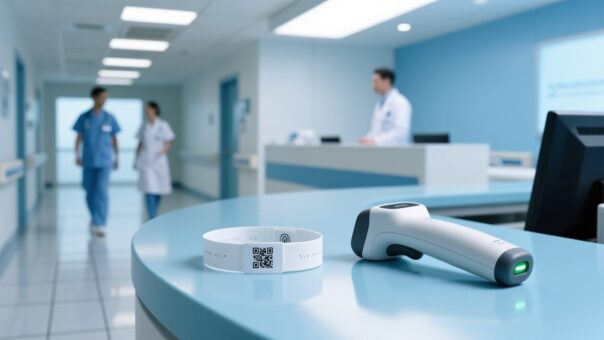
Barcode vs RFID patient wristbands comparison on hospital table with scanner

Barcode vs. RFID-Patientenarmbänder

This technical comparison guide examines barcode and RFID patient wristbands for hospital identification. Explore scanning mechanisms, read speed, accuracy benchmarks, Haltbarkeit, waterproof performance, cost analysis, and EMR/EHR integration. Learn why barcode patient ID remains a low-cost baseline while RFID patient tracking delivers 99.9% read accuracy, contactless batch reading, and long-term total cost of ownership advantages. Includes implementation recommendations for hybrid critical care and full-safety RFID deployments.

Hospital staff wearing RFID silicone wristbands at secure ward access point

Hospital Staff RFID Wristbands: Secure Zone Access and Attendance Tracking Guide

Hospital staff RFID wristbands combine secure zone access, automatic shift logging, and durable wearable identification for clinical environments. This operational guide covers role-based access for pharmacy, OR, and ICU areas, controlled substance security, attendance tracking integration, emergency staff location identification, and hygiene-friendly silicone wristband design. It also addresses contractor and visitor temporary credentials and practical implementation steps for hospital facilities managers, security directors, and HR administrators. The article explains how tap-to-enter access, automatic shift logging, and sanitizable silicone materials support healthcare security and workforce management without interfering with gloved clinical work.

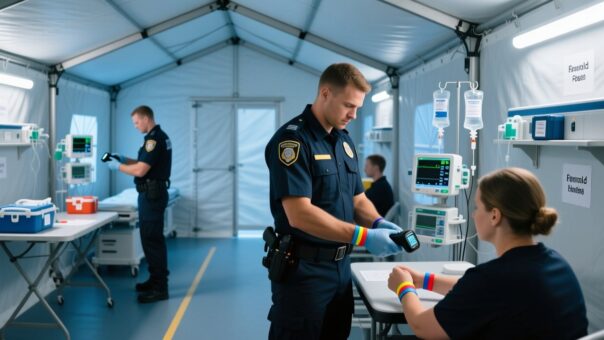
Emergency responder scanning color-coded RFID triage wristband on patient in field hospital

RFID Wristbands for Mass Casualty and Disaster Patient Triage: Rapid Identification in Emergencies

Mass casualty incidents require rapid patient identification that paper tags cannot reliably support. This emergency preparedness guide explains how RFID wristbands enable color-coded triage at the scene, tap-to-record patient registration, continuous tracking through treatment, and family reunification. It also covers durable waterproof designs, temporary field hospital infrastructure, and integration with disaster management systems. Emergency medical services, disaster response coordinators, and hospital emergency department managers will find practical selection criteria and deployment guidance for RFID triage wristbands.

Hospital staff wearing RFID silicone wristband tapping secure ward access reader

RFID Wristbands for Hospital Staff Access Control: Secure Zones and Attendance Tracking

Operational guide for hospital facilities managers, security directors, and HR administrators. Learn how hospital staff RFID wristbands enable tap-to-enter secure zones, role-based pharmacy and OR restrictions, automatic shift logging, and rapid staff location identification during emergencies. The article covers durable, sanitizable silicone wristband designs for gloved hands, integration with time and attendance systems, and temporary access for contractors and visitors. Includes practical implementation considerations and FAQs to help healthcare facilities strengthen staff access control, reduce tailgating, and improve workforce tracking without disrupting clinical workflows.

RFID fabric and silicone wristbands for assisted living resident safety and medication management

RFID Wristbands for Assisted Living and Elderly Care Facilities: A Resident Safety Solution

Assisted living facilities can improve resident safety, medication accuracy, and staff efficiency with RFID wristbands. This practical guide covers resident identification, wandering prevention, activity tracking, Medikamentenüberprüfung, comfortable fabric and waterproof silicone options, Zugriffssteuerung, fall detection integration, visitor management, and staff workflow. Learn how RFID technology supports daily care operations while respecting resident dignity and independence.

HIPAA compliant RFID patient wristband with handheld scanner in hospital setting

HIPAA Compliance and RFID Patient Wristbands: What Healthcare Providers Need to Know

RFID patient wristbands can improve safety without creating HIPAA risks if providers treat the wristband as a token rather than a data record. This compliance guide explains how RFID chips store only an encrypted UID while PHI stays in the secured backend database. It covers HIPAA Security Rule encryption and access control, role-based reader permissions, audit trails for every read, tamper-evident physical safeguards, patient consent, and breach notification. Hospital compliance officers, health IT directors, and privacy officers will find a practical HIPAA-to-RFID mapping table and implementation checklist for evaluating RFID patient identification systems.

RFID wristbands for mother-baby matching in maternity ward with nurse scanning newborn wristband

Mother-Baby Matching with RFID Wristbands: A Safety-Critical Guide for Maternity Wards

Discover how paired mother-baby matching RFID wristbands help maternity wards prevent newborn mix-ups, reduce infant abduction risk, and strengthen patient safety protocols. This guide explains newborn mini wristband design, instant mismatch alarms, tamper-evident cut detection, breastfeeding verification, staff access control, nursery zone restrictions, and safe discharge workflows. Written for maternity ward directors, patient safety officers, and neonatal care managers, it covers the practical requirements for deploying a reliable baby tracking system hospital-wide without disrupting clinical care.